Flashback to November 23
American History
1825
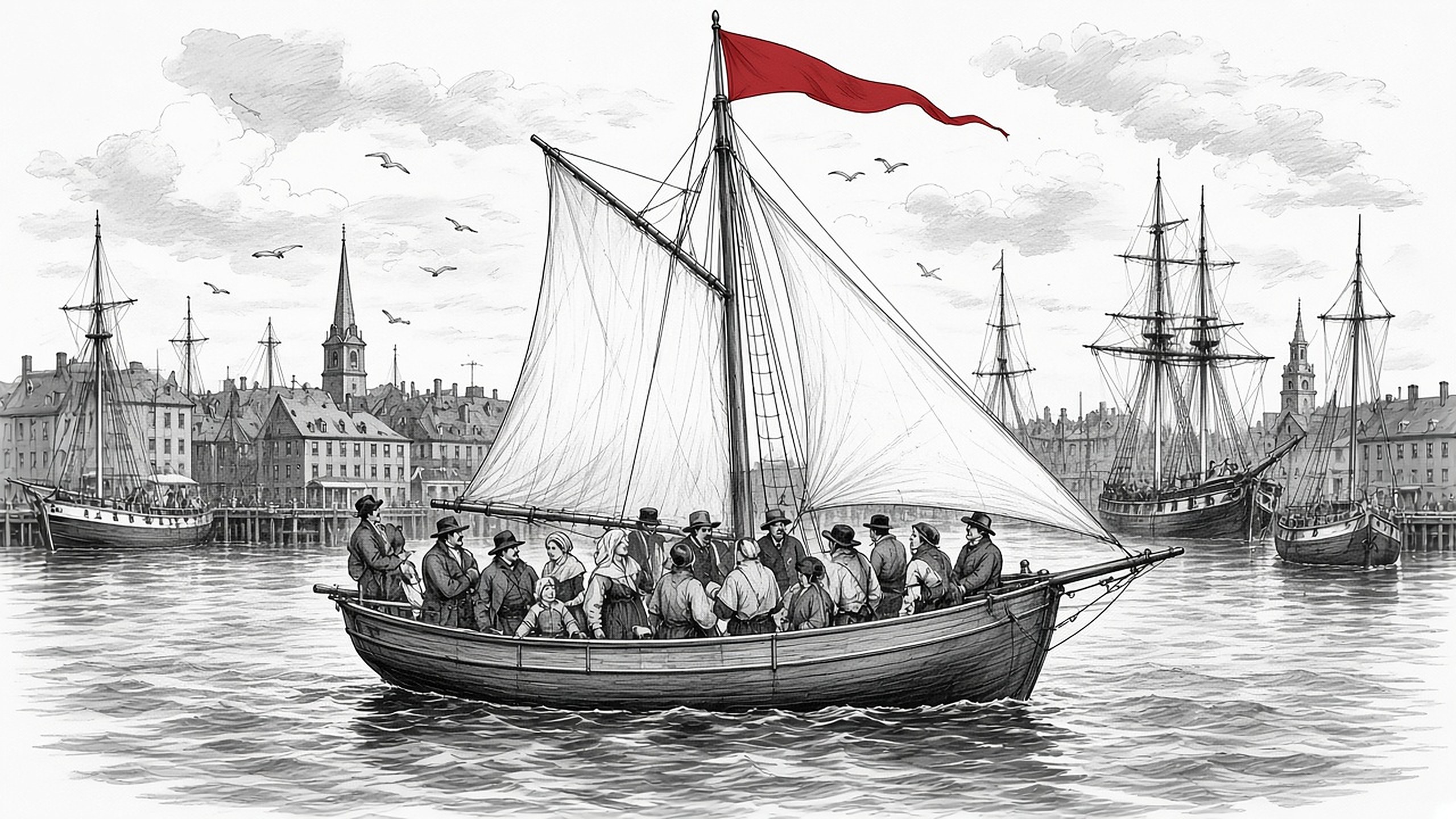
The sloop Restauration reaches New York, beginning organized Norwegian immigration to America
Read moreOn October 9, 1825, a small sloop named Restauration sailed into New York Harbor after more than three months at sea. On board was a group of emigrants from western Norway, the first organized party of Norwegians to settle in the United States. Their arrival marked the beginning of Norwegian American history, and it is the reason October 9 is now celebrated as Leif Erikson Day.
The emigrants, later known as the “Sloopers,” came mainly from Stavanger and the surrounding Rogaland region. Many were Quakers or sympathized with them, and they faced restrictions on their faith under Norway’s state Lutheran church. Their leader was Lars Larsen Geilane, a Quaker from Stavanger. The way had been prepared by Cleng Peerson, who had traveled to America in 1821 to scout for land and had found a promising site near Lake Ontario in western New York.
The group sailed aboard the sloop, which also carried a small cargo of iron to sell in America, leaving from Stavanger on July 4, 1825. Most accounts list 52 people on board, including the crew and many children. The crossing took about 98 days. During the voyage, Larsen’s wife gave birth to a daughter, so the vessel arrived with one more passenger than it had when it left.
Their arrival quickly turned into a legal problem. The Restauration was a tiny vessel, and under the Steerage Act of 1819 it was carrying far more passengers than American law allowed for a ship of its size. Customs officials seized the sloop, the captain, Lars Olsen Helland, was arrested, and the owners faced a heavy fine. After appeals, President John Quincy Adams issued a pardon in November 1825 that freed the captain and the vessel and canceled the penalty. Even so, the emigrants had to sell the sloop at a loss.
With Peerson’s help and the support of American Quakers, the Sloopers traveled up the Hudson River and along the newly completed Erie Canal to settle in the town of Kendall in Orleans County, New York. Life there was hard, and in the 1830s most of them moved west to the Fox River valley in Illinois. That settlement became a gateway for the much larger waves of Norwegian immigration that followed, and the upper Midwest became the heart of Norwegian America.
Over the next century, hundreds of thousands of Norwegians emigrated to the United States. In proportion to its population, only Ireland sent more emigrants to America during the nineteenth century.
Their descendants looked back to an earlier Norse voyager as a symbol of their heritage. Around the year 1000, according to the Icelandic sagas, Leif Erikson, son of Erik the Red, sailed from Greenland to a land he called Vinland. Archaeologists confirmed a Norse presence in North America at L’Anse aux Meadows in Newfoundland, and in 2021 scientists used tree rings to show that Norse visitors were cutting wood there in the year 1021.
Because no one knows the exact date of Leif’s voyage, Norwegian American groups chose October 9, the anniversary of the Restauration’s arrival, to honor him. Wisconsin adopted the date in 1929, and in 1964 Congress authorized the president to proclaim October 9 each year as Leif Erikson Day, honoring both the Norse explorer and the immigrants who arrived on that date in 1825.
We strive for accuracy. If you see something that doesn't look right, click here to contact us!
 Contact Us
Sponsored Content
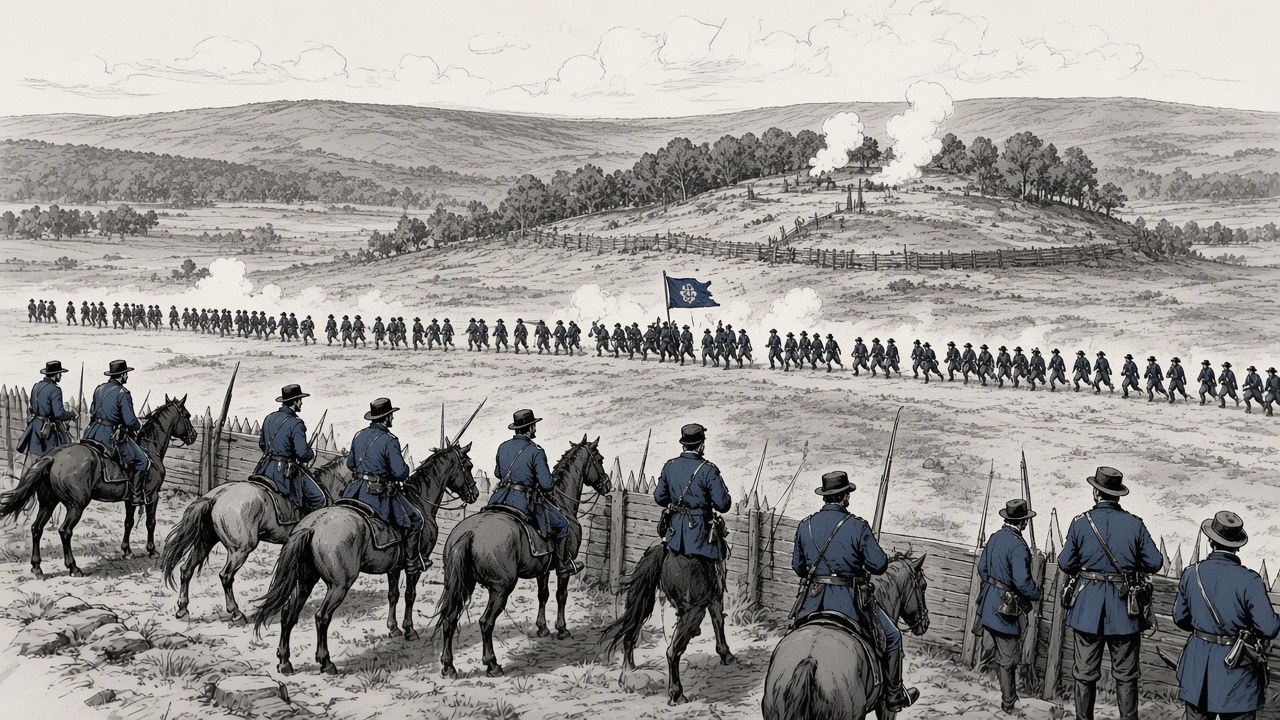
Battle of Chattanooga begins…
On November 23, 1863,…