Flashback to November 26
American History
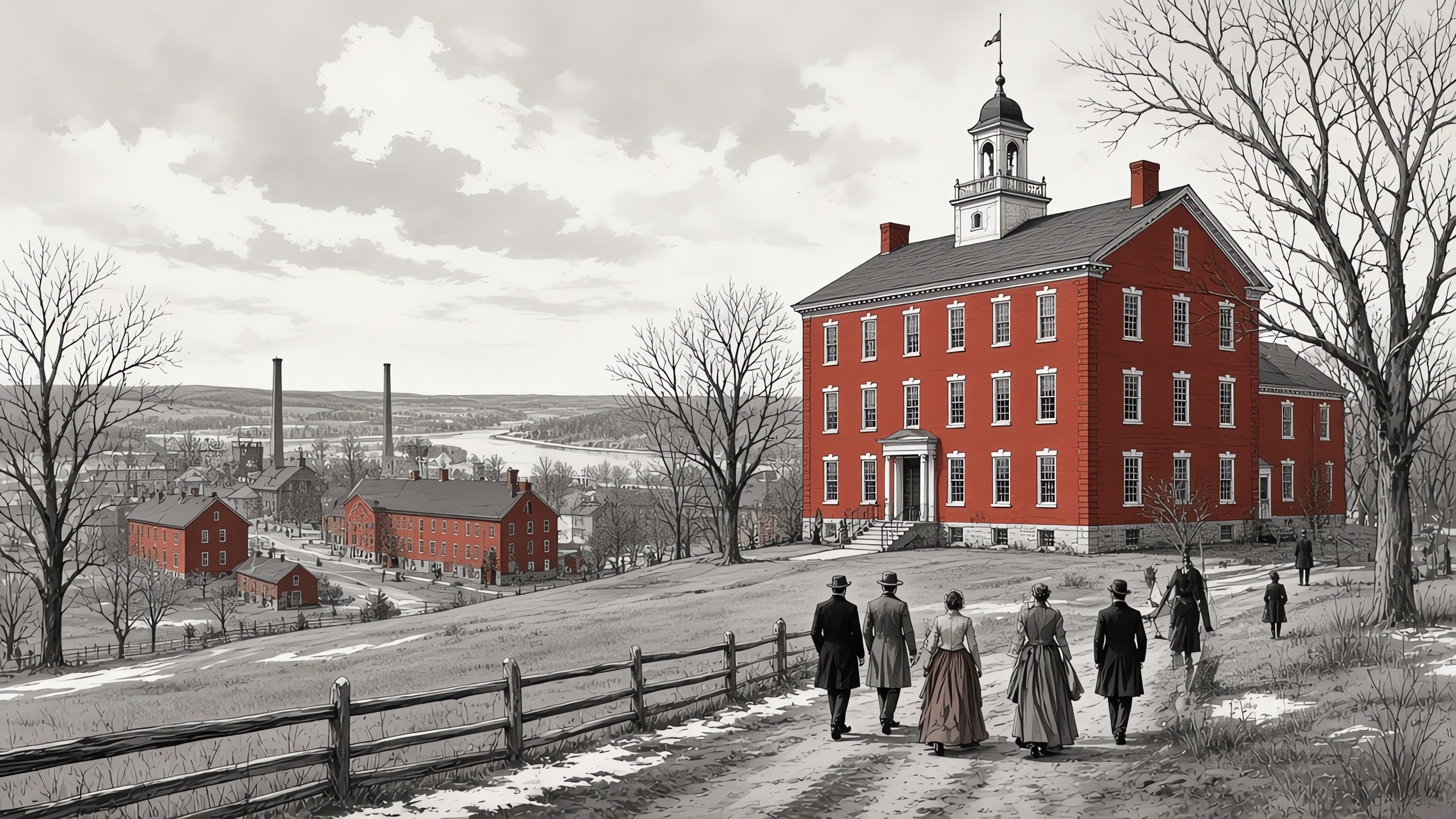
On March 16, 1855, the Maine Legislature granted a charter to the Maine State Seminary, a new school to be built in the mill town of Lewiston. Within a decade the seminary had become Bates College, one of the first colleges in New England to educate men and women together.
The driving force behind the school was Oren Burbank Cheney, a Free Will Baptist minister and former state legislator. The Free Will Baptists were a small but strongly reform-minded denomination, opposed to slavery and committed to education, and Cheney wanted to give their young people a school of their own in Maine.
Cheney spent months raising money and support. Several towns competed to host the seminary, and Lewiston won after local leaders, including the physician Alonzo Garcelon, promised land and cash. The town’s fast-growing textile mills along the Androscoggin River made it one of the most dynamic places in the state.
The charter created a board of trustees for the Maine State Seminary. Construction began soon afterward, and the school opened its doors in 1857, offering a liberal arts course along with theological training. From the beginning it admitted both men and women, and it was open to students regardless of race.
Cheney had larger ambitions. He soon began working to turn the seminary into a full college, and he found a crucial backer in Benjamin E. Bates, a Boston businessman whose company owned major mills in Lewiston. Bates gave generously to the school, and in 1864 it received a new charter as a college and took his name.
The early college struggled for money, and Cheney spent much of his time raising funds. Still, it grew steadily, adding buildings, students and faculty, and the Cobb Divinity School was associated with it for many years.
Bates developed a strong reputation for debate and public speaking, and its graduates went into teaching, the ministry, law and public life. Among its best-known alumni are Benjamin Mays, the educator and civil rights leader who later served as president of Morehouse College, and Edmund Muskie, who became governor of Maine, a U.S. senator and secretary of state.
The college kept its founders’ emphasis on access and equality. Its tradition of admitting students without regard to sex or race became a point of pride, and in the 20th century it gained attention for innovations such as making standardized admissions tests optional.
Today Bates is a selective liberal arts college with about 1,800 students. It still occupies the hill above Lewiston where the Maine State Seminary rose in the 1850s, and it dates its founding to the charter granted on March 16, 1855.
We strive for accuracy. If you see something that doesn't look right, click here to contact us!
 Contact Us
Sponsored Content
Sojourner Truth abolitionist, women’s…
Pioneering abolitionist and women's…
First streetcar railway in…
Explore the profound history…
Father Edward Sorin arrives…
On November 26, 1842,…
The United States observes…
On November 26, 1789,…
Kappa Alpha Society, the…
On November 26, 1825,…
US President Franklin Roosevelt…
On November 26, 1941,…