Flashback to November 26
American History
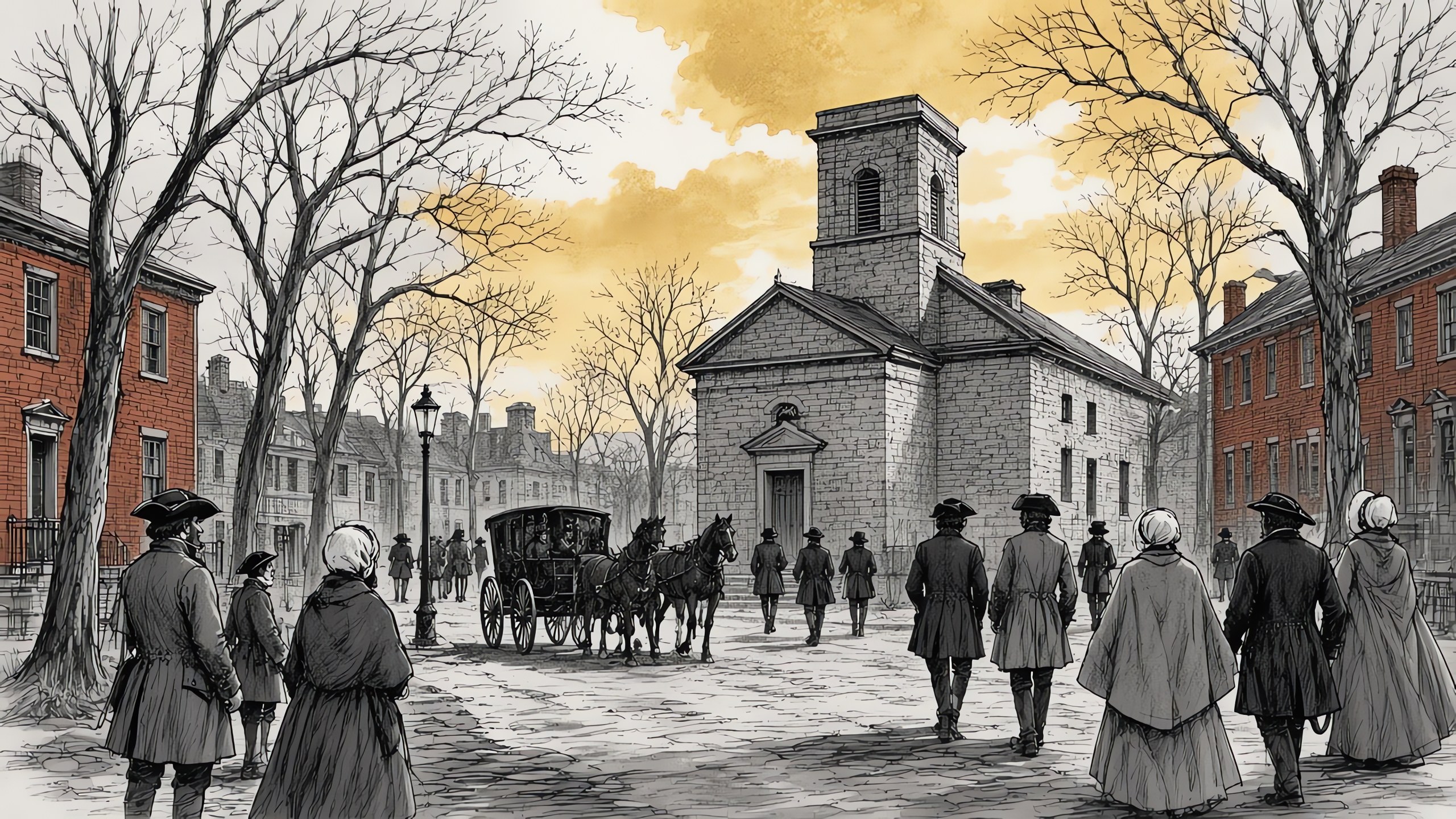
On November 26, 1789, the people of the United States observed the first national day of thanksgiving under the new federal Constitution. The day had been set by President George Washington, who was then in the first year of his presidency and living in New York City, the temporary seat of the government.
The idea came from Congress. On September 25, 1789, Representative Elias Boudinot of New Jersey introduced a resolution asking the president to recommend a day of public thanksgiving and prayer. The day would acknowledge the favors of Almighty God, especially the opportunity the American people had been given to establish a constitution of government peaceably.
Not everyone in the House agreed. Aedanus Burke of South Carolina complained that the plan mimicked European customs. Thomas Tudor Tucker, also of South Carolina, argued that Congress had no business telling citizens to give thanks, that the matter was religious, and that the people might not feel grateful for a Constitution until they had seen whether it worked. If there was to be a thanksgiving, he said, the states should call it.
The supporters, citing biblical examples and the thanksgiving days declared by the Continental Congress during the Revolution, carried the vote. The Senate agreed the next day, and a joint committee carried the request to Washington.
On October 3, 1789, Washington issued his proclamation from New York. He assigned “Thursday the 26th day of November next” as a day for the people to give thanks for the protection they had received before becoming a nation, for the outcome of the war for independence, and for the peaceful way in which they had been able to establish constitutions of government, “and particularly the national One now lately instituted.” He also asked for prayers that the new national government would be one of wise, just and constitutional laws.
Washington sent copies to the state governors and asked them to publish the proclamation in their states. Newspapers printed it across the country, and churches held services on the appointed day. Washington himself attended services at St. Paul’s Chapel in New York and sent beer and food to the debtors held in the city’s prison.
The proclamation did not create a permanent holiday. Washington issued another thanksgiving proclamation in 1795, and later presidents did so only from time to time, while many states kept their own customs. A long campaign led by the magazine editor Sarah Josepha Hale finally persuaded Abraham Lincoln to proclaim a national Thanksgiving in 1863, a day that also fell on November 26.
Washington’s proclamation of 1789 is now remembered as the start of the national Thanksgiving tradition. It tied the holiday from its first year to the founding of the federal government and to the hope that the young Constitution would hold the country together.
We strive for accuracy. If you see something that doesn't look right, click here to contact us!
 Contact Us
Sponsored Content
Sojourner Truth abolitionist, women’s…
Pioneering abolitionist and women's…
First streetcar railway in…
Explore the profound history…
Father Edward Sorin arrives…
On November 26, 1842,…
The United States observes…
On November 26, 1789,…
Kappa Alpha Society, the…
On November 26, 1825,…
US President Franklin Roosevelt…
On November 26, 1941,…