
Flashback to June 6
World History
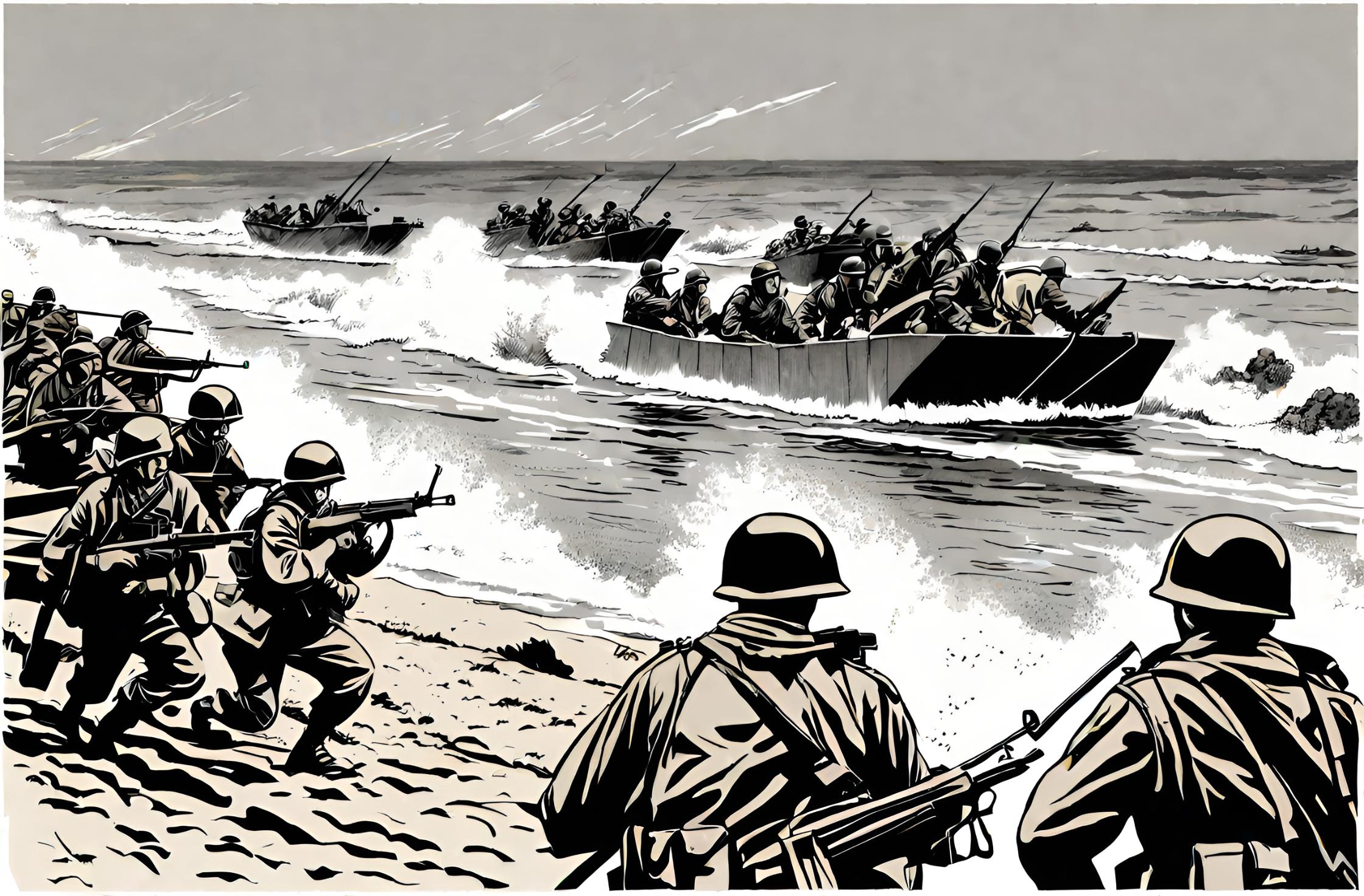
On the 6th of June, 1944, an event unfolded that was to forever carve its name in the annals of history. This event, simply referred to as D-Day, marked an essential turning point in World War II. Its scope, scale, and significance only continue to emanate with deep resonance even today, many years after its occurrence.
D-Day brightens recollections of the heroism that surrounded the Allied invasion of Normandy. D-Day, an iconic term in military parlance, brought together the Allied forces in a brave, well-planned offensive aimed at loosening the grip of Adolf Hitler’s Third Reich over Europe. The monumental events that unfolded on and around the beaches of Normandy, France, on that fateful day, marked an unparalleled landmark in world history.
After years of meticulous planning, the Allied troops launched an amphibious invasion on the shores of Normandy. Thousands of boats, planes, and brave soldiers played integral roles in this grand operation. D-Day was not merely an event, it was a meticulously orchestrated shift where soldiers from the United States, United Kingdom, and Canada, alongside others from the Allied forces, converged to push back the tides of war.
Sowing the seeds of D-Day, the deception strategy Operation Fortitude played a significant role in misleading the German High Command. The allies tricked them into believing that the attack would occur at Pas de Calais, the shortest geographical distance between England and France, instead of Normandy. This operation was a masterstroke in strategic planning, which effectively divided and perplexed the German defense forces.
Going further into the anatomy of D-Day, the operation was divided into two main parts: Operation Neptune and Operation Overlord. Operation Neptune was to initiate and establish a solid foothold on the Normandy beaches, while Operation Overlord was the overarching strategy to invade German-occupied Western Europe. Over 156,000 troops were deployed on D-Day along the 50-mile stretch of Normandy beaches: Utah, Omaha, Gold, Juno, and Sword. The heavy armored divisions provided much-needed artillery support, leading to successful establishment of beachheads.
While the invasion was by no means an easy feat, the sheer audacity and determination of the Allied forces ushered in a new dawn of hope. Post D-Day, Paris was liberated by August and the German forces pushed back even further. This was the beginning of the end for Hitler’s Third Reich, and it all started on the shores of Normandy on D-Day.
Though seen from the lens of victory, it’s also important to consider the human cost of D-Day. The sacrifices of thousands of soldiers who risked their lives, and many who lost them, painted the narrative of this significant day in world history. The valor of those who fought and the price they paid remains forever etched in our collective memories.
While D-Day signifies a major turning point in World War II, it’s also a significant milestone in the history of human conflict. The coordinated actions of multiple nations, strategy, and the sheer courage of the soldiers involved have made D-Day an unforgettable chapter in modern history.
The significance of D-Day persists in the present day, reminding us of the cost of freedom and the tremendous sacrifices made to attain it. Remembering the events of this day shines a spotlight on the bravery of the soldiers, the logistics of the commanding officials, and the resilience of human ambition. The reverberations of D-Day remain, highlighting an important chapter in our past and shaping our understanding of the events that have defined our world.
We strive for accuracy. If you see something that doesn't look right, click here to contact us!
 Contact Us
Sponsored Content
D-Day
Relive the courage and…

Dr Carl Gustav Jung,…
Dr. Carl Gustav Jung,…
Paris Metro Line 5…
On 6/6/1906, the Paris…
The Indian Army attacks…
On 6/6/1984, the Indian…
Cunard Line’s RMS Lusitania…
On June 6, 1906,…
A near-Earth asteroid estimated…
On 6/6/2002, a near-Earth…
