
Flashback to May 25
World History

2003
US Secretary of State Colin Powell addresses the United Nations Security Council on Iraq, giving evidence of Iraq’s efforts to conceal weapons of mass destruction from inspectors
Read moreOn February 5, 2003, a significant event took place at the United Nations Security Council. U.S. Secretary of State Colin Powell addressed the council, presenting evidence of Iraq’s efforts to conceal weapons of mass destruction (WMD) from inspectors. This pivotal moment played a crucial role in the lead-up to the Iraq War. Let’s delve into the details of Powell’s address and its impact on global affairs.
During his speech, Secretary Colin Powell presented what was believed to be concrete evidence of Iraq’s possession and concealment of WMD. Powell cited intelligence reports, satellite images, and even firsthand testimonies to make his case. His presentation aimed to convince the international community, particularly the Security Council, of the urgent need for action against Iraq.
The impact of Powell’s address was significant, as it gave many countries a fresh perspective on Iraq’s intentions and capabilities. However, over time, doubts regarding the accuracy of the intelligence highlighted by Powell emerged. The absence of any substantial WMD findings in Iraq after the invasion further fueled skepticism about the adequacy of the evidence presented.
Despite the controversy surrounding the validity of the evidence, Powell’s speech successfully garnered support from several nations, including some skeptics. The United States believed military force was necessary to deal with the perceived threat coming from Iraq. This address further divided the international community and set the stage for the invasion of Iraq.
From an international standpoint, this event highlighted the significance of the United Nations Security Council as a platform for diplomacy and international consensus. Powell’s address aimed to convince other nations to support the U.S. position. However, it also raised concerns about the influence wielded by the U.S. in the Security Council and the use of intelligence as a tool for persuasion.
The long-term consequences of Powell’s address were far-reaching. The Iraq War, which ensued shortly after, resulted in significant loss of life, geopolitical instability, and enduring global repercussions. The failure to find substantial evidence of WMD in Iraq post-invasion led to criticism and disillusionment regarding the justification for the war.
Secretary Colin Powell’s address before the United Nations Security Council on February 5, 2003, was a watershed moment in regards to international relations, the Iraq War, and the global perception of the United States. Despite the controversy surrounding the evidence presented, the impact of Powell’s speech cannot be overlooked. It ultimately played a significant role in swaying public opinion and international support for military intervention in Iraq. Understanding the context and consequences of this event is crucial for comprehending the complex dynamics of global affairs in the early 2000s.
We strive for accuracy. If you see something that doesn't look right, click here to contact us!
 Contact Us
Sponsored Content
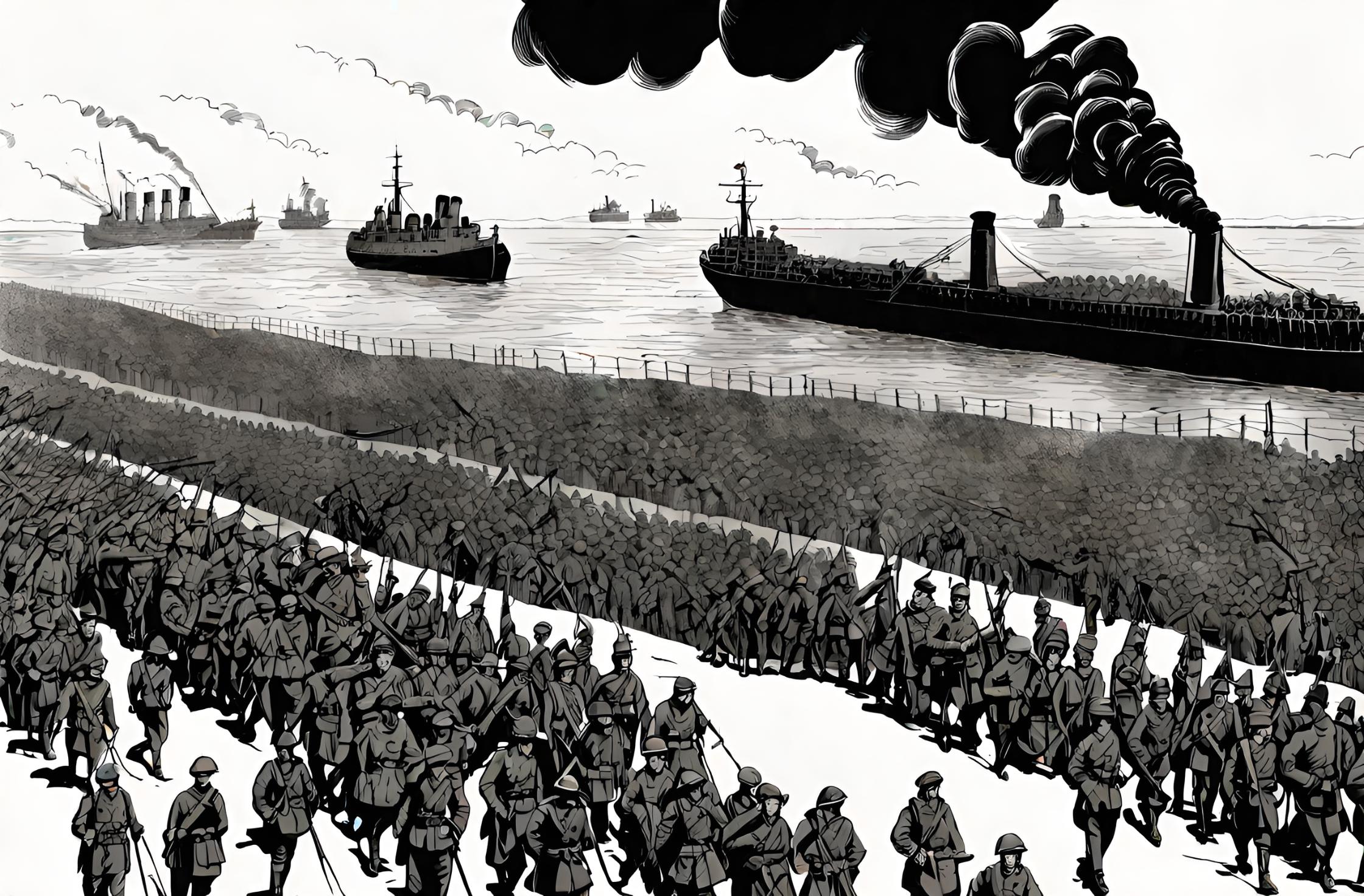
The Dunkirk Evacuation starts
Experience the pivotal 1940…
English Parliament prohibits circulation…
On 5/25/1813, the English…
NTstor Kirchner becomes President…
On May 25, 2003,…
Saint Boniface IV dies,…
On May 25, 615,…
Aldhelmus of Ealdhelm, England,…
On May 25, 709,…
Gas lamp at Paris…
On 5/25/1887, a tragic…
