Flashback to November 27
American History
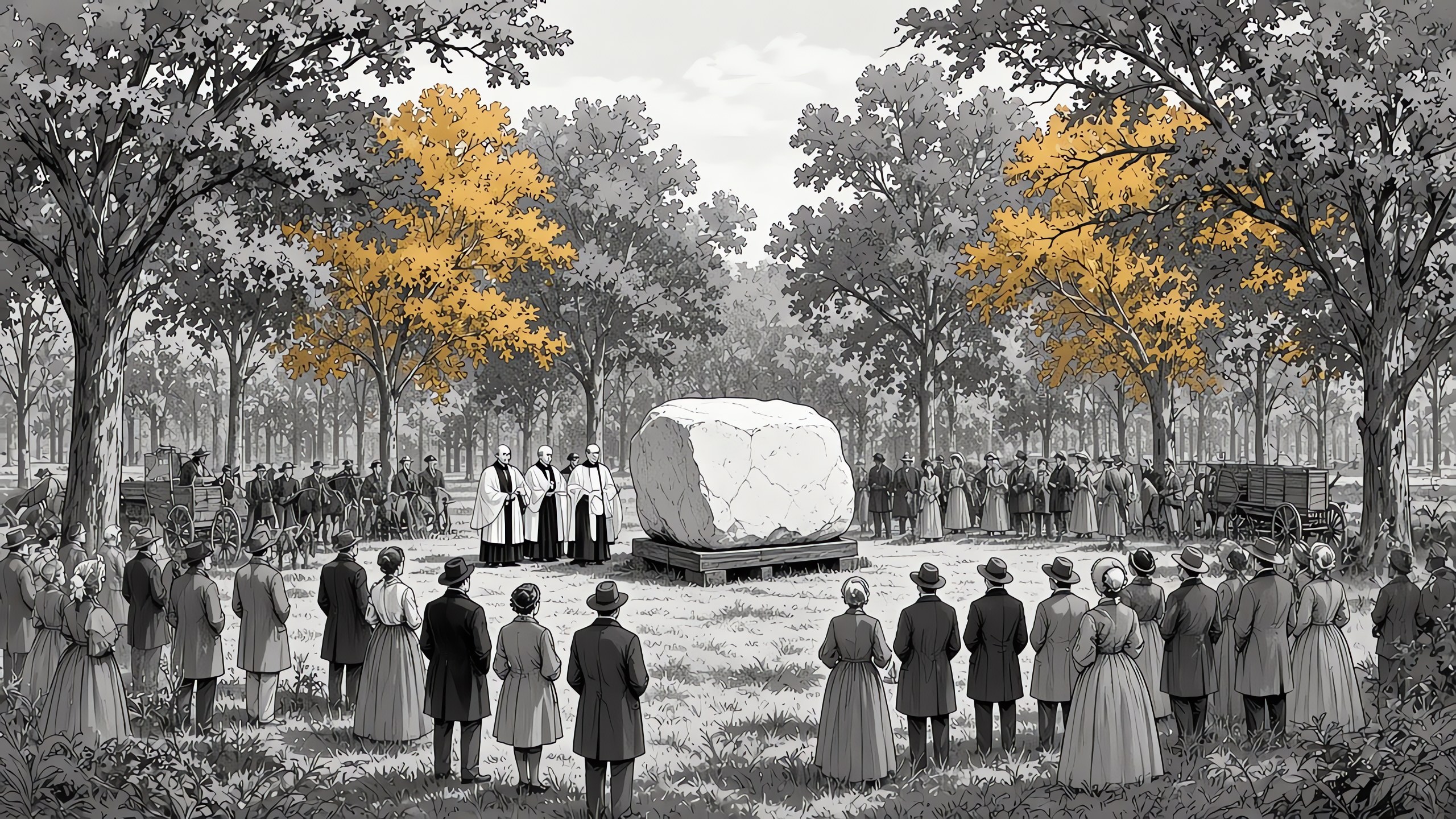
On October 10, 1860, Episcopal bishops, clergy and a large crowd of visitors gathered in a clearing on the Cumberland Plateau in Tennessee to lay the cornerstone of the University of the South. The ceremony at Sewanee marked the founding of a new university, though the Civil War would soon halt its progress.
The university was the project of Episcopal leaders from across the Southern states. Its chief promoter was Leonidas Polk, the bishop of Louisiana, who with Bishop James Otey of Tennessee and Bishop Stephen Elliott of Georgia proposed a single great church university for the region in 1856.
Dioceses from ten Southern states joined the effort. The founders chose a remote site on the plateau, high above the surrounding valleys, where the Sewanee Mining Company and local landowners offered thousands of acres. They believed the cool, healthy mountain air would suit students from the lowland South.
The plan was also bound up with the politics of the time. The founders wanted to educate the sons of the Southern elite close to home, away from Northern colleges, and they openly saw the university as a defender of Southern society, a society built on slavery.
At the ceremony, a massive six-ton block of marble was set in place as the cornerstone and consecrated by Bishop Polk. Visitors traveled from across the South to witness the event, and the trustees had ambitious plans for a large university with many colleges.
Those plans were cut short within months. The Civil War broke out in April 1861, and Polk himself became a Confederate general. He was killed at Pine Mountain in Georgia in June 1864.
The war devastated the site. In 1863 Union soldiers blew up the marble cornerstone, and many of the broken pieces were carried away as souvenirs. When the war ended, the university existed mostly on paper, with little money and no buildings.
The school opened at last in 1868 with a handful of students, under the leadership of Bishop Charles Todd Quintard of Tennessee. It grew slowly into a respected liberal arts college, known for its Gothic stone buildings, its forested campus, called the Domain, and The Sewanee Review, founded in 1892 and the oldest continuously published literary quarterly in the United States.
In recent years the university has openly examined its origins, including its founders’ defense of slavery and its later honoring of Confederate leaders. Today Sewanee is a small, selective university, still owned by Episcopal dioceses and still located on the plateau where the cornerstone was laid in 1860.
We strive for accuracy. If you see something that doesn't look right, click here to contact us!
 Contact Us
Sponsored Content

San Francisco Mayor George…
On November 27, 1978,…

Baby Face Nelson is…
On November 27, 1934,…
Custer’s 7th Cavalry attacks…
On November 27, 1868,…

New York’s Pennsylvania Station…
Experience the grandeur of…

Side-wheeler “Portland” sinks off…
A maritime tragedy unfolded…

First signal box for…
On November 27, 1890,…