
Flashback to November 26
Entertainment History
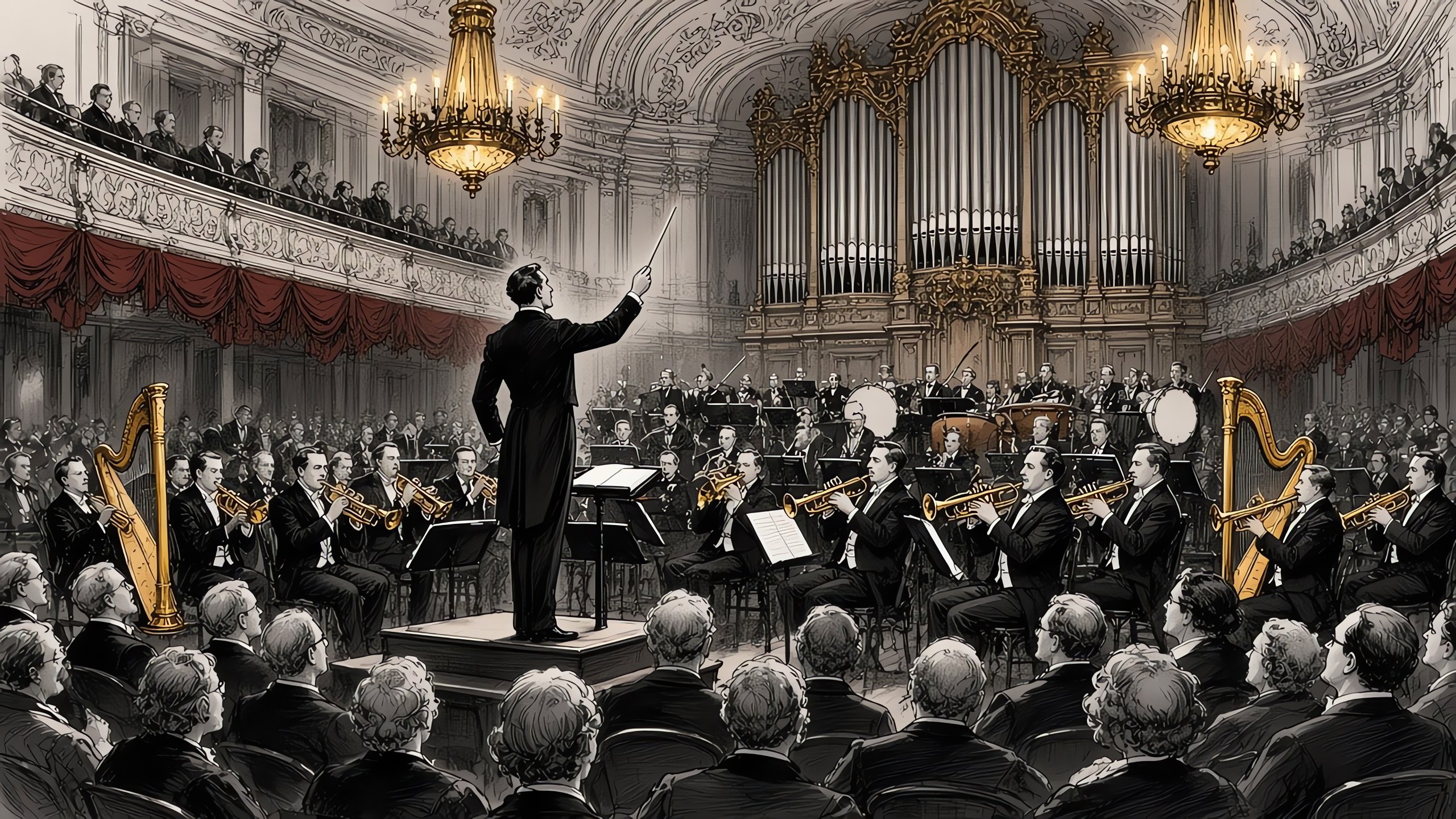
On November 27, 1896, the German composer Richard Strauss stepped onto the podium in Frankfurt to conduct the first performance of his new tone poem, Also sprach Zarathustra. The half-hour orchestral work was inspired by Friedrich Nietzsche’s philosophical book of the same name, published in parts between 1883 and 1885. Its opening bars would one day become some of the most recognized music ever written.
Strauss was 32 and already well known in German musical life. His earlier tone poems, including Don Juan, Death and Transfiguration and Till Eulenspiegel’s Merry Pranks, had shown how a large orchestra could tell a story or paint a character without words. He was also a busy conductor, and he composed Zarathustra during 1896 while holding a post at the Munich court opera.
Nietzsche’s book follows a prophet named Zarathustra who comes down from the mountains to teach that humanity must overcome itself. Strauss did not try to set philosophy to music line by line. Instead he took titles from chapters of the book and used them for nine connected sections, played with only three clear pauses, moving from awe at nature through longing, passion, science and dance to an unresolved ending.
The work calls for a huge orchestra, including six horns, four trumpets, two tubas, organ, two harps, timpani and a deep bell. It opens with a low, sustained note in the double basses, contrabassoon and organ. Trumpets then climb through three rising notes, the full orchestra answers with a blazing chord, and the timpani pound out a reply. Strauss called this introduction “Sunrise.”
The new score divided opinion. Some listeners questioned whether music could, or should, try to express a philosopher’s ideas, and Strauss himself explained that he meant to convey an impression of the development of the human race rather than Nietzsche’s thought itself. The piece soon entered the repertoire of other orchestras.
For decades Also sprach Zarathustra was a respected but not especially famous part of the concert repertoire. That changed in 1968, when director Stanley Kubrick used the opening fanfare in his film 2001: A Space Odyssey. Set against images of the sun rising over the Earth and the Moon, the music suddenly reached a vast new audience.
The fanfare spread quickly into popular culture. Elvis Presley used it to open his concerts in the 1970s, and a jazz-funk version by Brazilian musician Eumir Deodato became a hit and won a Grammy Award in 1974. It has since been heard at sporting events, in commercials and in countless parodies, often by listeners who have never heard the rest of the work.
Strauss went on to write operas such as Salome, Elektra and Der Rosenkavalier and lived until 1949. Yet the few seconds of sunrise first played in Frankfurt in 1896 remain the music most closely tied to his name.
We strive for accuracy. If you see something that doesn't look right, click here to contact us!
 Contact Us
Sponsored Content
Toll of the Sea…
Witness film history on…
The Sex Pistols release…
On November 26, 1976,…
Casablanca has its world…
On November 26, 1942,…
The New Yorker publishes…
Published on 26th November…
