
Flashback to November 26
Entertainment History
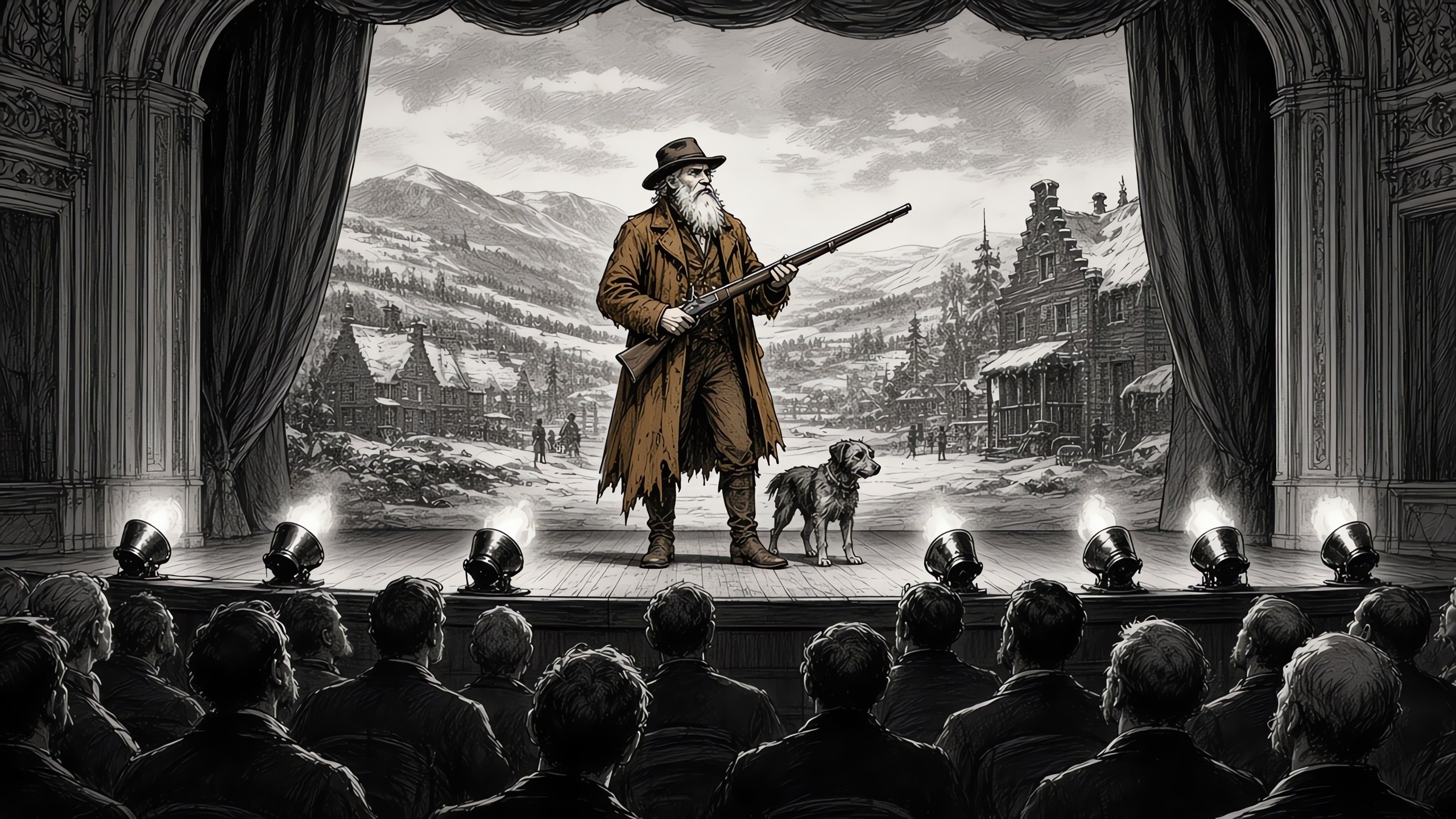
On December 24, 1860, Joseph Jefferson stepped onto the stage of the Winter Garden Theatre in New York as Rip Van Winkle, the lazy, good-natured villager who sleeps for twenty years in the Catskill Mountains. The role was still taking shape, but it would become one of the most famous performances in the history of the American stage.
Jefferson came from a family of actors. His grandfather and father had both been actors, and he first appeared on stage as a small child. By the late 1850s he had made his name in New York as a comic actor, especially as Asa Trenchard in the hit play Our American Cousin at Laura Keene’s theater.
The idea of playing Rip came to him in the summer of 1859. While staying at a farmhouse in Pennsylvania, he was reading a biography of Washington Irving and discovered that Irving had once seen him perform and compared him to his father. Thinking of Irving’s story, first published in The Sketch Book in 1819, Jefferson decided that Rip was the American character he had been looking for.
Rip Van Winkle had been adapted for the stage several times before. Earlier versions had been played by Jefferson’s father, by the actor James H. Hackett and by Jefferson’s half-brother Charles Burke, whose version Jefferson thought the best. Jefferson put together his own adaptation from these older plays and first acted it in Washington later in 1859.
His Winter Garden engagement brought the part to a New York audience. Jefferson played Rip as a gentle, lovable figure rather than a buffoon, mixing comedy with sadness, especially in the scenes of the old man’s return to a village that no longer knows him.
Jefferson’s career soon took a long detour. After the death of his first wife in 1861, he left for California and then Australia, where he acted for four years. In 1865 he went to London and asked the playwright Dion Boucicault to rework the play completely.
The new version opened at the Adelphi Theatre in London in September 1865 and ran for more than 150 nights. Jefferson brought it home in 1866, and for the rest of his life he was identified with the part, touring it in almost every American city for nearly four decades.
The role made Jefferson one of the most admired actors of his time. In 1896 he was filmed in short scenes from the play, and those films are now preserved in the National Film Registry.
Rip Van Winkle became so closely tied to Jefferson that for many Americans his face was the face of Irving’s character. His early performances, including the New York run that began on Christmas Eve 1860, were the first steps toward that lasting fame.
We strive for accuracy. If you see something that doesn't look right, click here to contact us!
 Contact Us
Sponsored Content
Toll of the Sea…
Witness film history on…
The Sex Pistols release…
On November 26, 1976,…
Casablanca has its world…
On November 26, 1942,…

The New Yorker publishes…
Published on 26th November…
