
Flashback to May 25
World History

1996
In Canada, the Royal Canadian Mint releases a $2 circulating coin, depicting a polar bear on an ice flow
Read moreIn Canada, on February 19, 1996, a significant event occurred that marked an important milestone in the country’s currency history. The Royal Canadian Mint released a new $2 circulating coin, featuring a beautiful depiction of a polar bear on an ice flow. This coin held special significance as it was the first bi-metallic coin ever introduced in Canada, with a core made of aluminum bronze and an outer ring composed of pure nickel. Coinciding with this release, the Bank of Canada ceased production of $2 notes, further cementing the importance of this new coin in Canada’s currency system.
The introduction of the new $2 coin was met with excitement and interest from the Canadian public. The polar bear design was chosen to symbolize the country’s unique natural heritage and its close association with the Arctic region. The image of the polar bear standing on an ice flow perfectly captured the beauty and strength of one of Canada’s most iconic wildlife species.
The decision to transition from $2 notes to a coin was not made arbitrarily. There were several factors that influenced this shift in currency. The main reason was the durability and cost-effectiveness of coins compared to paper notes. Coins have a longer lifespan, lasting for decades, while banknotes tend to wear out more quickly and need to be replaced frequently. This increased durability of coins reduces the costs associated with reprinting and reissuing currency, resulting in significant savings for the government.
The introduction of bimetallic coins, like the new $2 coin, also offered enhanced security features compared to banknotes. The combination of different metals in a single coin makes it extremely difficult to counterfeit, providing a higher level of security for the currency system. This added security feature reassured Canadians that their currency was protected from fraudulent activities.
The design of the new $2 coin was met with great appreciation and quickly became a popular collectible item among both coin enthusiasts and the general public. The Royal Canadian Mint produced millions of these coins, ensuring widespread availability and usage across the country. The unique composition of the coin, with its aluminum bronze core and pure nickel outer ring, added to its appeal and made it stand out in the overall currency circulation.
With the release of the new $2 coin, the Bank of Canada made the decision to discontinue the production of $2 notes. This move was part of a broader effort to streamline the currency system and promote the use of more cost-effective and secure coins. Although the transition from notes to coins had been met with some initial resistance, over time, Canadians accepted and embraced the new $2 coin as part of their everyday transactions.
The introduction of the polar bear coin marked a significant milestone in Canada’s currency history. It not only represented a shift from paper notes to coins but also highlighted Canada’s commitment to innovation and security in its currency system. To this day, the $2 coin continues to be in circulation, serving as a symbol of Canadian heritage and a testament to the country’s rich natural resources.
the release of the $2 circulating coin depicting a polar bear on an ice flow by the Royal Canadian Mint on February 19, 1996, was a momentous event in Canada’s currency history. It introduced the first bi-metallic coin in the country, with a unique composition of aluminum bronze core and pure nickel outer ring. Simultaneously, the Bank of Canada ceased production of $2 notes, transitioning to the more durable and cost-effective coin. This event marked an important step towards enhanced security and efficiency in Canada’s currency system, while also celebrating the country’s natural heritage.
We strive for accuracy. If you see something that doesn't look right, click here to contact us!
 Contact Us
Sponsored Content
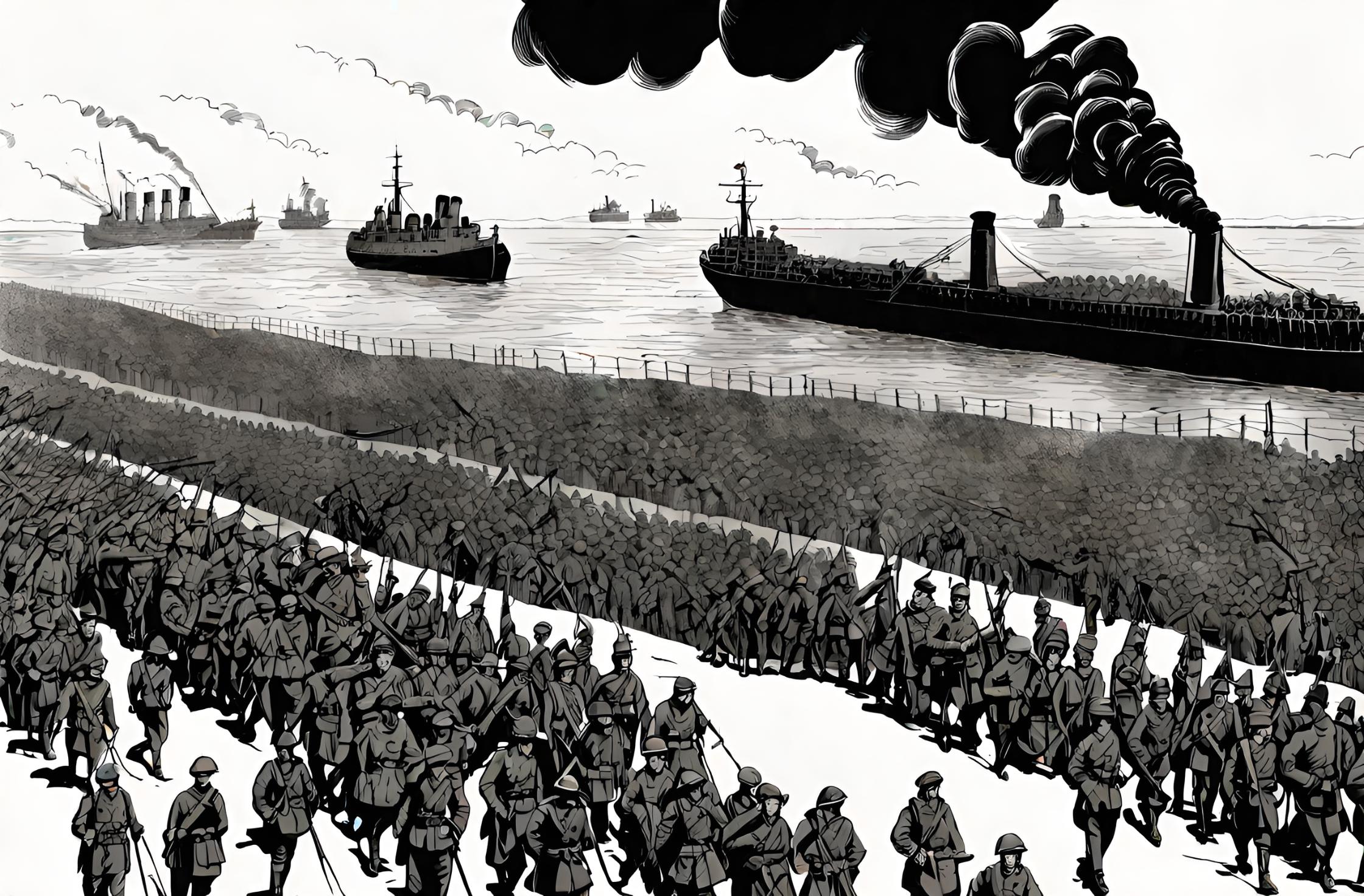
The Dunkirk Evacuation starts
Experience the pivotal 1940…
English Parliament prohibits circulation…
On 5/25/1813, the English…
NTstor Kirchner becomes President…
On May 25, 2003,…
Saint Boniface IV dies,…
On May 25, 615,…
Aldhelmus of Ealdhelm, England,…
On May 25, 709,…
Gas lamp at Paris…
On 5/25/1887, a tragic…
