
Flashback to November 28
Sports History
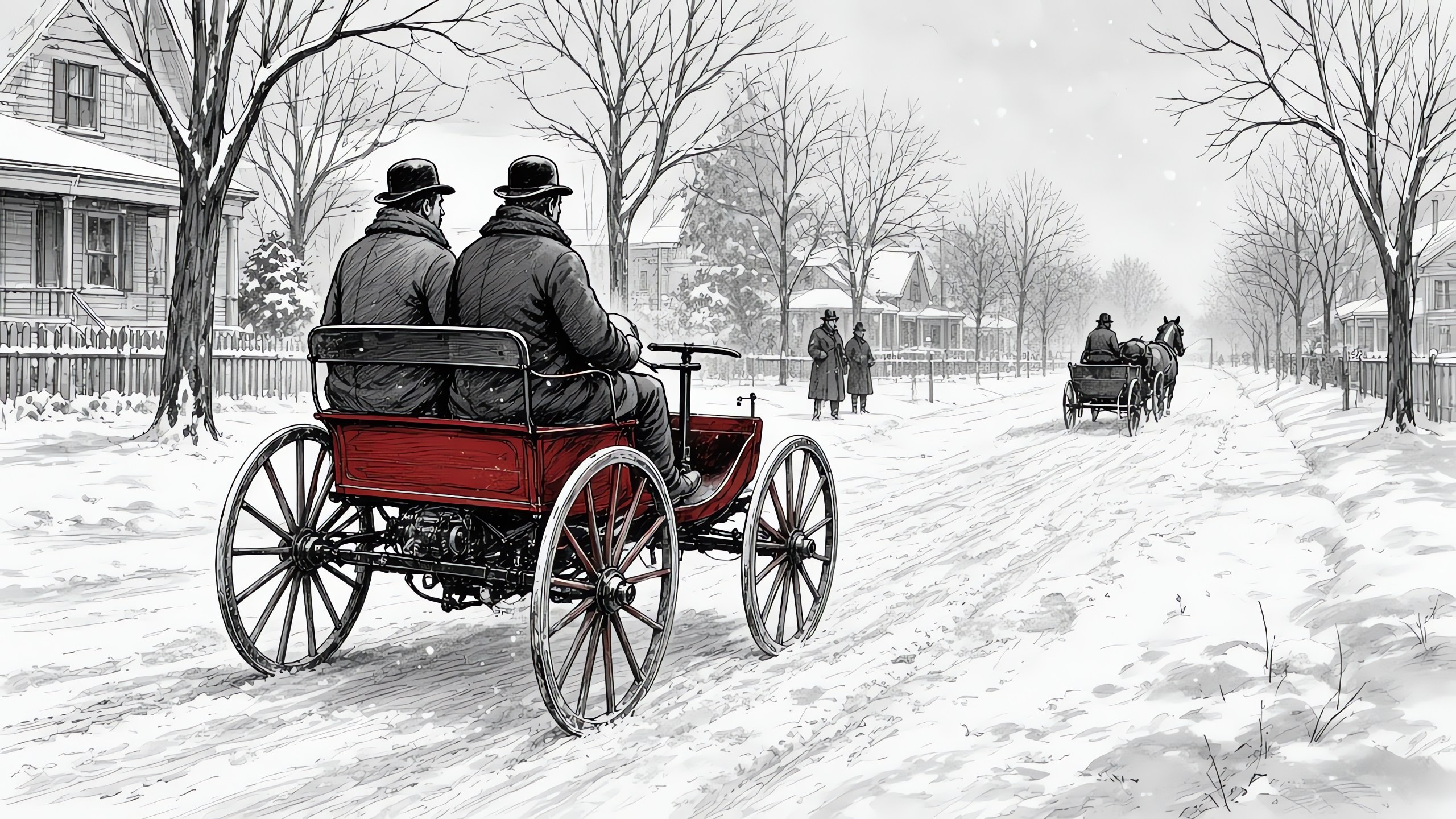
On Thanksgiving Day, November 28, 1895, six motor vehicles set out from Jackson Park on Chicago’s South Side on a 54-mile run to Evanston and back. It was the first automobile race held in the United States, and only two of the machines made it to the finish. The winner, after more than ten hours on snowbound roads, was J. Frank Duryea of Springfield, Massachusetts, driving a gasoline wagon developed with his brother Charles.
The contest was the idea of Herman H. Kohlsaat, publisher of the Chicago Times-Herald, who announced a $5,000 purse that summer to encourage inventors of self-propelled road carriages and, not least, to sell newspapers. The vehicles were so new that the paper held a contest to name them. The winning entry, “motocycle,” appeared in its coverage but never caught on.
Organizers first planned a course from Chicago to Milwaukee, but poor roads forced a shorter route. The race was also postponed from early November, when few entrants were ready. Some drivers who brought their machines into the city were stopped by police and told they had no right to use the streets, and the city had to pass an ordinance before the event could go ahead.
A storm the night before the race left about six inches of snow, with deep drifts in places, and temperatures hovered near freezing. More than 80 vehicles had been entered, but only six reached the start: three German-built Benz cars, the Duryea, and two electric carriages. Each carried an umpire to make sure it followed the course.
The electric machines soon dropped out as the cold drained their batteries. One Benz slid on streetcar tracks and collided with a horse-drawn car, and another struck a streetcar, a sleigh and a cab before its engine finally failed. Duryea suffered his own breakdowns and left the route to find a blacksmith’s forge for repairs. Over the final miles a horse-drawn sleigh broke a trail through the snow ahead of him.
The only other finisher was a Benz entered by the H. Mueller company of Decatur, Illinois. Its driver, Oscar Mueller, collapsed from exposure during the run, and the umpire, Charles Brady King, took the tiller and brought the car home in second place. King went on to build and drive the first automobile on the streets of Detroit the following year.
The judges announced their awards on December 5. Duryea received the $2,000 first prize and Mueller $1,500, while a gold medal for design went to the Morris and Salom Electrobat on the strength of technical tests. The race drew coverage in newspapers across the country, and many writers predicted that horse-drawn transport would soon give way.
The publicity helped the Duryea Motor Wagon Company, which in 1896 built thirteen copies of its winning design, an early example of an American firm making cars for sale. The prize-winning wagon itself was later destroyed, but the Mueller Benz survives in Decatur, a reminder of the snowy Thanksgiving when the American auto industry announced itself.
We strive for accuracy. If you see something that doesn't look right, click here to contact us!
 Contact Us
Sponsored Content
Ernie Nevers scores all…
On November 28, 1929,…
Frank Duryea wins America’s…
On November 28, 1895,…
Major League Baseball commissioner…
In a remarkable instance…
