
Flashback to May 25
World History

The Methuen Treaty, also affectionately known as the “Port Wines Treaty”, forms a pivotal moment in the historical trade ties between England and Portugal. This agreement, which took effect on 12/27/1703, holds a significant place not only in the geopolitical context but also in the trade scenario of that era. It played an influential role in shaping the economic dynamics between the two nations and subsequently influenced the global economic structure. The focus of this interesting treaty pivots around a most unlikely product – textiles and wines.
Now you might be wondering about the association between these two utterly divergent products and a monumental trade agreement. Let’s delve into the historical layers, which will throw light on this unusual but potent correlation. The Methuen Treaty was signed between John Methuen, the then ambassador of England in Portugal, and his Portuguese counterparts. The clause of this agreement states that Portuguese wines will pay less duty in England than wines imported from France. In return, England agreed to export its textiles to Portugal, free from any import charges.
This benefits both signatory countries. On one hand, Portugal got an open and receptive market for its wines, mainly port wines, in England. On the other hand, England obtained a needy market for its woollen textiles, which were under a significant production decline. The Methuen Treaty provided a strategic solution to this impending crisis in England’s textile industry. It subsequently led to increased trade between the two nations, thus strengthening their economic ties.
Over the years, the significance of the Methuen Treaty in England and Portugal’s bilateral relationship cannot be overstated. Let’s talk about the impact of this treaty in today’s time in terms of modern history and economics, particularly about the wine industry in Portugal. Portugal’s vineyards are famous for their port wines, which is a sweet, fortified wine. Since 1703, the year that marks the signing of the Methuen Treaty, port wines have had a significant place in England’s wine market.
The Methuen Treaty played a massive role in promoting Portugal’s port wine in the English market. This treaty gave Portugal a high-beneficial edge in the global wine industry as England’s wine market was among the foremost in the world. Due to the preferential treatment of the Portuguese wines in terms of import duty, Portugal had a strategic advantage over its strongest competitor, France.
Similarly, from England’s perspective, this treaty played a quintessential role in reviving its ailing textile industry. The Methuen-Asiento agreement also signified the start of a new era in trade policies, where barter was used as a strategic tool to overcome local economic challenges. It gave a hint of the upcoming trade era, where negotiations and agreements would play an essential role.
Despite facing criticism for middlemen and corruption in the initial years, this treaty still proved itself to be a forward-thinking agreement. The Methuen Treaty signifies a significant part of trade history, which has shaped global economics in larger ways than we could comprehend.
So, to sum up, the Methuen Treaty, signed on 12/27/1703 between England and Portugal, is more than just a simple trade agreement. It strategized an ingenious way to overcome local economic challenges, paving the way for future diplomatic relationships. The influence of this treaty is still visible in the present international trade scenario.
We strive for accuracy. If you see something that doesn't look right, click here to contact us!
 Contact Us
Sponsored Content
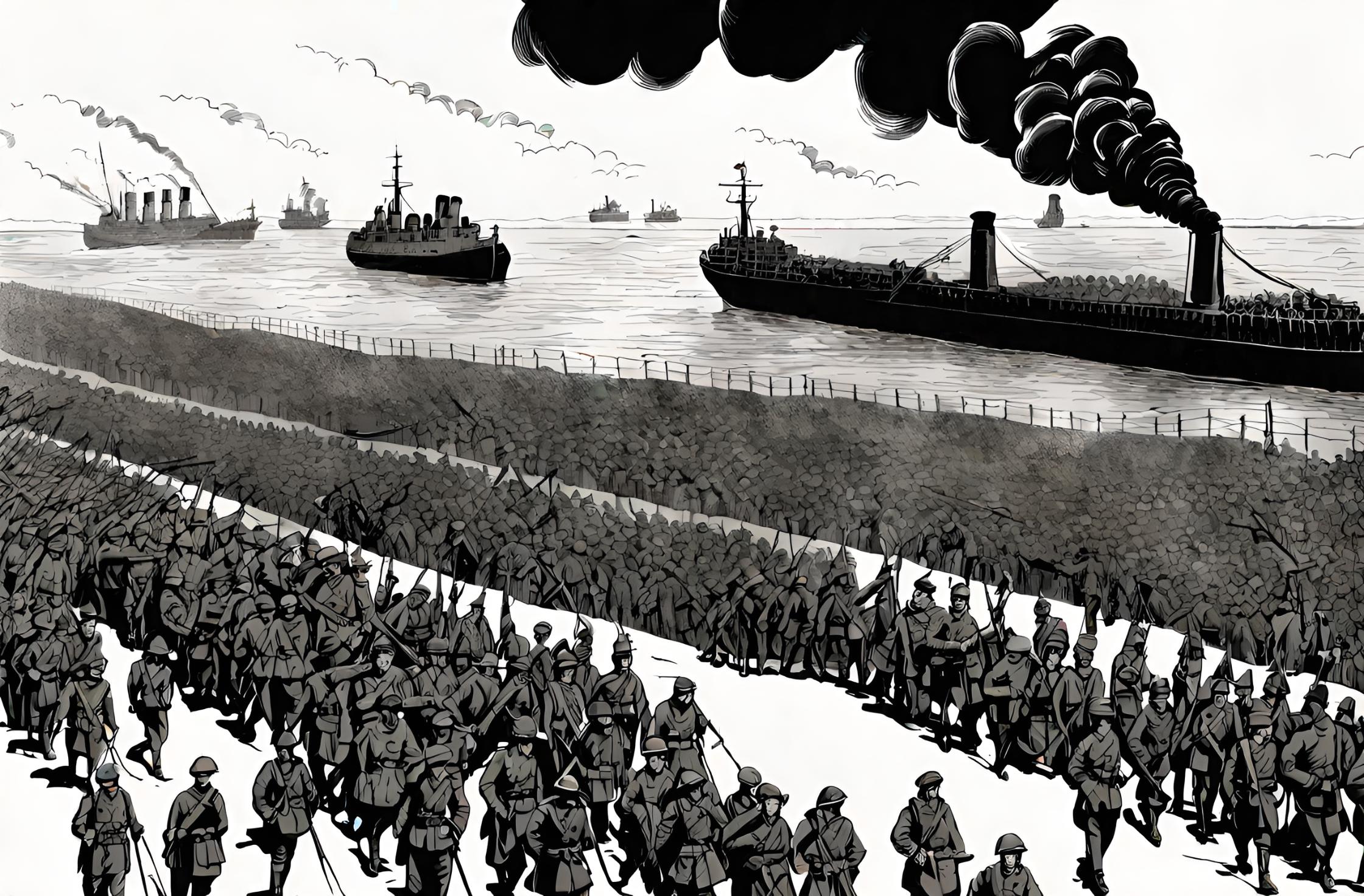
The Dunkirk Evacuation starts
Experience the pivotal 1940…
English Parliament prohibits circulation…
On 5/25/1813, the English…
NTstor Kirchner becomes President…
On May 25, 2003,…
Saint Boniface IV dies,…
On May 25, 615,…
Aldhelmus of Ealdhelm, England,…
On May 25, 709,…
Gas lamp at Paris…
On 5/25/1887, a tragic…
