
Flashback to June 23
American History
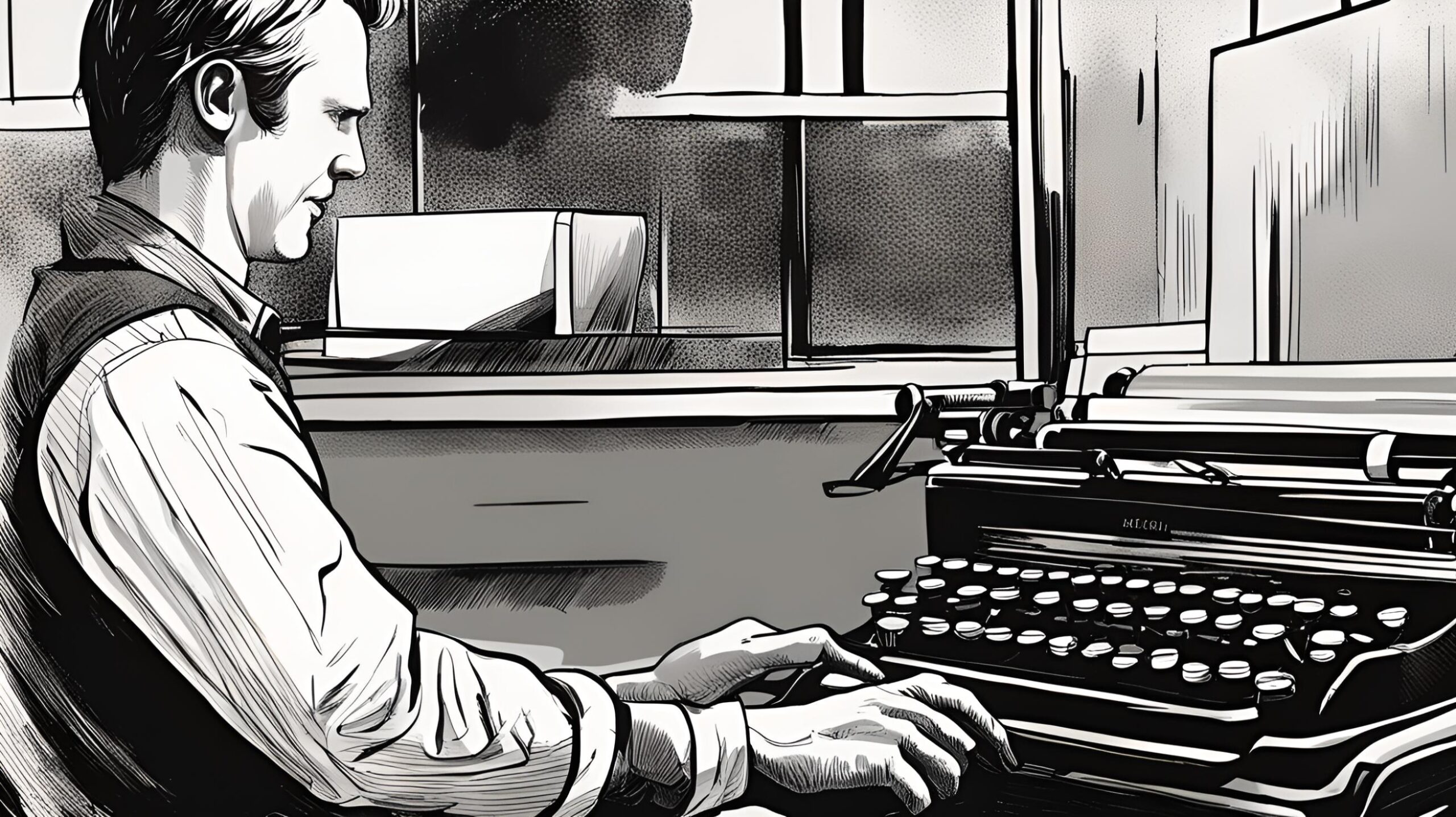
Christopher Latham Sholes is widely recognized as the inventor of the typewriter, a device that revolutionized the way we communicate in the modern world. On June 23, 1868, Sholes was granted a patent for his invention, which he called the “Type-writer.” This event marked a significant milestone in the history of technology and had a profound impact on various industries, including journalism, administration, and publishing.
Before the invention of the typewriter, writing was a time-consuming and labor-intensive task. Every document and letter had to be handwritten, which often led to inconsistencies in style and legibility. Sholes recognized the need for a more efficient and standardized way of writing, which eventually led to the creation of the typewriter.
The first typewriter designed by Sholes was a crude and bulky machine. It had a keyboard with uppercase letters arranged in alphabetical order. However, this design proved to be inefficient as the typebars often got tangled when pressed in quick succession. Sholes and his associates, Carlos Glidden and Samuel W. Soule, tinkered with different designs and eventually arrived at the “QWERTY” keyboard layout that is still in use today.
The QWERTY layout was strategically designed to minimize the likelihood of typebar jams. By rearranging the letters, Sholes ensured that frequently used letter combinations were placed farther apart, thus reducing the chances of mechanical clashes. This innovative layout became a standard and has withstood the test of time, even in the age of digital technology.
Sholes’ invention quickly gained popularity among journalists and writers. The typewriter allowed for faster and more legible writing, which was particularly advantageous in newsrooms where speed and accuracy were of utmost importance. Journalists could now type up their articles and dispatch them quickly to the printing press, eliminating the need for time-consuming handwritten copies.
The business community also benefited greatly from the typewriter. Administrative tasks such as writing letters, creating invoices, and maintaining records became significantly more efficient. Companies could now produce professional-looking documentation in a fraction of the time it would take to write by hand. This newfound productivity translated into increased profitability and improved organizational efficiency.
The typewriter also played a crucial role in the publishing industry. Publishers could now produce books and manuscripts at a faster rate, enabling them to meet the growing demand for printed materials. This technological advancement opened up new opportunities for authors, who no longer had to rely solely on traditional publishing houses to have their work printed and distributed. Self-publishing became a viable option, democratizing the world of literature.
In addition to its impact on various industries, the typewriter had significant social implications. It expanded employment opportunities for women, who faced limited career prospects during that time. Typewriting became a sought-after skill, and women quickly adapted to this new technology. Many women found work as typists, stenographers, and secretaries, leading to greater financial independence and social mobility.
Although the typewriter has now been largely replaced by computers and word processors, its invention remains a landmark event in the history of technology. Christopher Latham Sholes’ patent for the Type-writer paved the way for advancements in communication and transformed the way we write and document information. His invention not only enhanced efficiency and productivity but also empowered individuals and opened up new avenues for creativity and expression.
We strive for accuracy. If you see something that doesn't look right, click here to contact us!
 Contact Us
Sponsored Content
Christopher Latham Sholes patents…
On June 23, 1868,…
US Civil Aeronautics Authority…
On June 23, 1938,…
122 degrees F (50…
On 6/23/1954, Overton, Nevada…
John Jacob Astor organizes…
On June 23, 1810,…
Marineland opens near St.…
On June 23, 1938,…
U.N. inspection teams attempt…
U.N. inspection teams face…
