
Flashback to November 29
American History
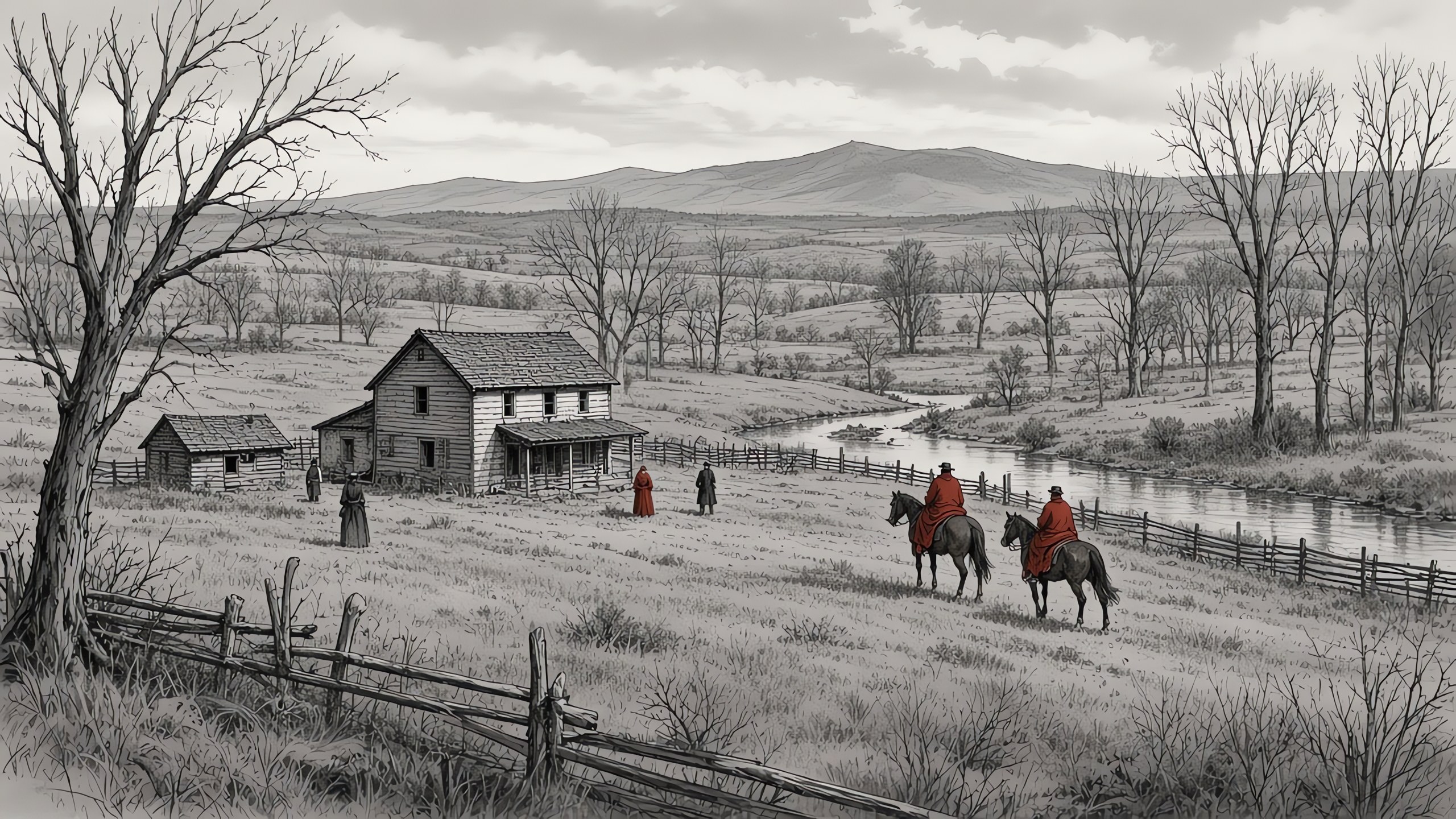
On November 29, 1847, a small group of Cayuse men attacked the Whitman Mission at Waiilatpu, on the Walla Walla River in what is now southeastern Washington. They killed the missionary physician Marcus Whitman, his wife, Narcissa, and eleven other men and boys over the following days, and took dozens of women and children captive. The killings shocked the American settlements in the Northwest and pushed Congress to act on the future of the Oregon Country.
The Whitmans had arrived in 1836 as missionaries of the American Board of Commissioners for Foreign Missions. Narcissa Whitman and Eliza Spalding, who traveled with them, are remembered as the first white women to cross the continent overland. The couple built a farm and mission among the Cayuse, but they had little success with conversions, and relations with their hosts cooled over the years.
By the mid-1840s, Waiilatpu had become a stopping place for emigrants on the Oregon Trail, and Marcus Whitman spent more of his time helping wagon trains than teaching the Cayuse. Many Cayuse feared that the growing stream of settlers would take their land. Those fears sharpened in 1847, when emigrants brought measles to the area.
The epidemic struck both settlers and Cayuse, but the outcomes were very different. Most white patients recovered, while the Cayuse, who had no immunity, died in large numbers, many of them children and elders. Some Cayuse came to believe that Whitman was poisoning them rather than healing them. Under Cayuse custom, a healer whose patients died could be held responsible with his life, and Whitman had been warned more than once that he was in danger.
On the afternoon of November 29, men led by the headman Tiloukaikt came to the mission house and asked for medicine. While Whitman was speaking with Tiloukaikt in the kitchen, he was struck from behind and fatally wounded. The attackers then turned on the men working around the mission. Narcissa Whitman was shot and later killed in a burst of gunfire after being led out of the house. Several more men died over the next days.
The survivors, around fifty people, many of them children, were held at the mission for about a month. Some died of measles in captivity, including a young daughter of the mountain man Joe Meek. Peter Skene Ogden of the Hudson’s Bay Company finally negotiated their release in late December in exchange for blankets, shirts, guns, ammunition and tobacco.
The killings set off the Cayuse War, as volunteer militias from the Willamette Valley marched east. Meek carried the news overland to Washington, and in August 1848 Congress created Oregon Territory, the first formal territorial government west of the Rockies. In 1850, five Cayuse men surrendered and were tried in Oregon City; they were convicted and hanged that June, though doubts were raised about whether all of them had taken part.
For decades afterward the Whitmans were celebrated as pioneer martyrs, while the Cayuse side of the story was largely ignored. Today the mission site is the Whitman Mission National Historic Site, where the National Park Service presents both accounts, and the Cayuse are part of the Confederated Tribes of the Umatilla Indian Reservation.
We strive for accuracy. If you see something that doesn't look right, click here to contact us!
 Contact Us
Sponsored Content
Enos the chimpanzee orbits…
On November 29, 1961,…

Richard E. Byrd and…
On November 29, 1929,…
Cayuse men kill missionaries…
On November 29, 1847,…
Six Kansas City firefighters…
On November 29, 1988,…

US President Lyndon Johnson…
On November 29, 1963,…
Fire destroys most of…
The historical Santa Catalina…
