
Flashback to May 25
World History

On August 31, 2007, a significant event occurred in the landscape of North American geopolitics when Canada announced the decision to arm its customs officers along the border with the United States. This move was unprecedented in the history of bilateral security measures between these two long-time allies.
To understand the full implications of this move, it’s essential first to look back at the historical context surrounding the Canadian-US border. For the longest time, this border has been touted as the world’s longest undefended border. The two nations maintained peaceful co-existence, underpinned by shared values, cultural similarities, and a comprehensive binational agreement for trade and travel across the border.
However, the global landscape has always been shifting, bringing with it new security and geopolitical challenges. After 9/11, both Canada and the US took significant steps to bolster their national security whilst maintaining the flow of goods and people across their mutual border. The decision to arm Canadian customs officers taken on 31 August 2007 reflected these evolving circumstances.
Canada’s decision to arm its customs officers came with a precise goal. The primary objective was to enhance the security and safety of customs officers who are the nation’s first line of defense. The move aimed to provide these officers with the necessary tools to protect themselves and secure the border effectively while handling any potential threat that could jeopardize Canadian security.
The initiative involved arming around 4,800 border service officers with Beretta Px4 Storm handguns. The roll-out was done in phases and included rigorous training for officers on using the firearms, effectively changing the operational practices of the Canada Border Service Agency (CBSA).
While this decision was viewed by some as a dramatic shift in Canada’s border policy, it remained in line with the practices of other countries. Many Western nations, including the US, have long equipped their border guards with arms, making Canada one of the last industrialized nations to do so.
There was, however, criticism amidst this move. Critics argued that arming customs officers would militarize the otherwise peaceful border and fuel a climate of fear. There were also questions about potential implications for relations between Canada and the US.
In response, Canadian authorities insisted that this action did not signal a materially different approach to border management. They maintained that the move was a pragmatic response to evolving global security threats. The focus, they said, remained on facilitating the free, easy passage of goods and people – a mutual goal shared with the US.
This 2007 initiative was a critical juncture in the history of Canadian border controls. Much has transpired since then, but this decision is still viewed in many respects as defining the current outlook on national security at the Canada-US border.
The keyword here is balance. How do countries like Canada and the US balance their need for security with the necessity for free movement across borders? In a world with ever-evolving security challenges, the actions taken by governments to protect their borders will always be viewed through different lenses.
Canada’s decision to arm its customs officers along the US border in 2007 signaled its readiness to adapt to changing global security dynamics. It represented a necessary, albeit controversial, step ensuring the protection of its officers and the nation’s wider security interests, whilst attempting to maintain the movement’s fluidity across one of the world’s most important borders. This balance between national security and free movement continues to be an important issue in North American geopolitics today.
We strive for accuracy. If you see something that doesn't look right, click here to contact us!
 Contact Us
Sponsored Content
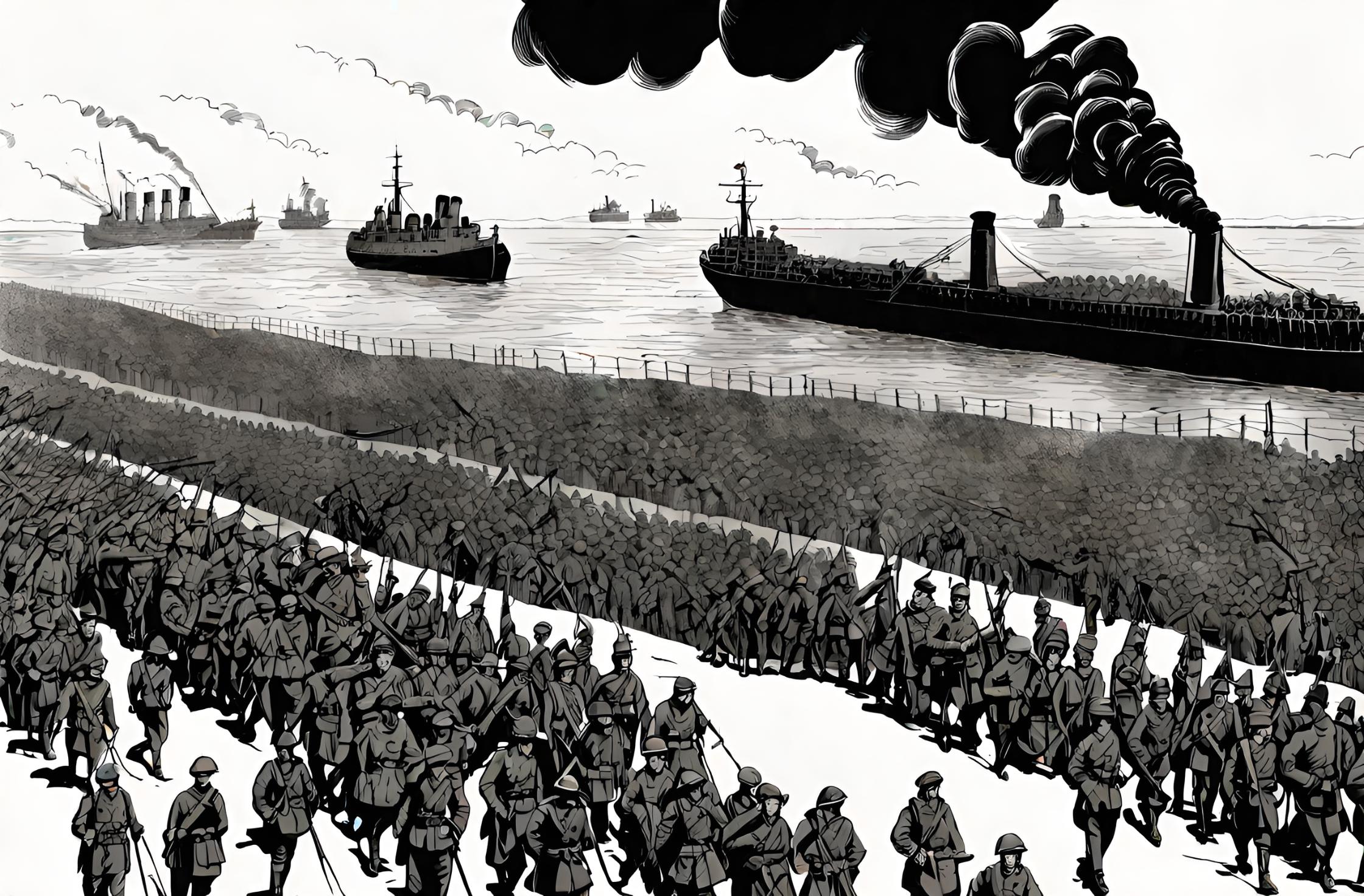
The Dunkirk Evacuation starts
Experience the pivotal 1940…
English Parliament prohibits circulation…
On 5/25/1813, the English…
NTstor Kirchner becomes President…
On May 25, 2003,…
Saint Boniface IV dies,…
On May 25, 615,…
Aldhelmus of Ealdhelm, England,…
On May 25, 709,…
Gas lamp at Paris…
On 5/25/1887, a tragic…
