
Flashback to November 24
American History
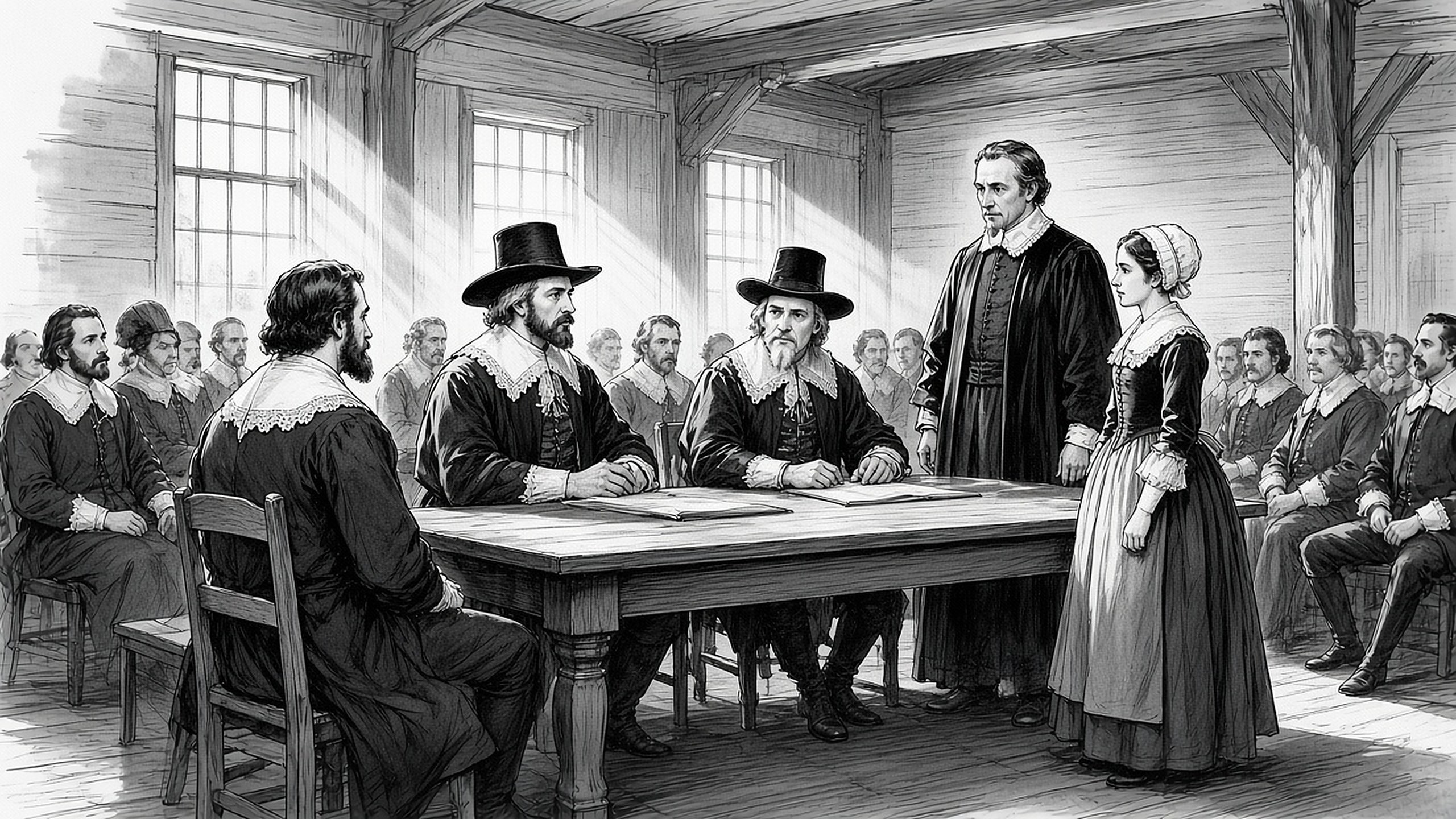
1623
A Virginia minister’s breach-of-promise suit against a widow comes before the colony’s council
Read moreOn June 14, 1623, the governor and council of Virginia heard testimony in one of the most unusual cases in early American history. The Rev. Greville Pooley, a minister, accused the widow Cecily Jordan of breaking her promise to marry him. English records give the date of the examinations as June 4, because England and its colonies still used the Julian calendar, ten days behind the Gregorian one. The case is regarded as the first breach-of-promise suit in English America and the first in which a man sued a woman.
Cecily Jordan had come to Virginia as a girl in 1610. She was married to Samuel Jordan, a planter and member of the colony’s first General Assembly, who owned a plantation on the James River known as Jordan’s Journey. The family survived the Powhatan attack of March 1622, but Samuel Jordan died early in 1623, leaving her with two young daughters and expecting a third child.
Pooley had recently arrived in the colony and had conducted Samuel Jordan’s funeral. According to the testimony, only three or four days after the death he asked Captain Isaac Madison to speak to the widow on his behalf. She is said to have replied that she would as soon have him as any other man, but that she would not marry anyone until her child was born.
Pooley then visited her himself. He later claimed that, after they shared a drink, he took her hand and spoke the words of a marriage contract, and that she agreed. Madison, who was present, testified that he did not hear her repeat the words or clearly give her consent. She asked Pooley to keep the matter quiet so soon after her husband’s death, but he spoke about it openly.
Cecily Jordan soon became engaged instead to William Farrar, a planter who was helping to settle her husband’s estate. Pooley then took his complaint to the governor, Sir Francis Wyatt, and the council.
The councilmen could not decide whether a valid contract existed. They wrote that they were not able to resolve “so nice a difference” and referred the question to the Virginia Company in London, asking for the opinion of its lawyers. London also declined to rule. In January 1625 Pooley signed a formal release freeing her from any claim, and she married Farrar soon afterward.
The affair caused a stir in the young colony. The authorities issued an order forbidding women to promise themselves to more than one man at a time. The case is still cited as a curious early chapter in American family law.
We strive for accuracy. If you see something that doesn't look right, click here to contact us!
 Contact Us
Sponsored Content
James J Kilroy, tank…
"James J Kilroy, originator…
Un-American Activities Committee finds…
On November 24, 1947,…
National Rifle Association organized…
"The National Rifle Association…

Jack Ruby shoots Lee…
On November 24, 1963,…

Hijacker Dan Cooper (AKA…
On November 24, 1971,…
