
Flashback to November 29
American History
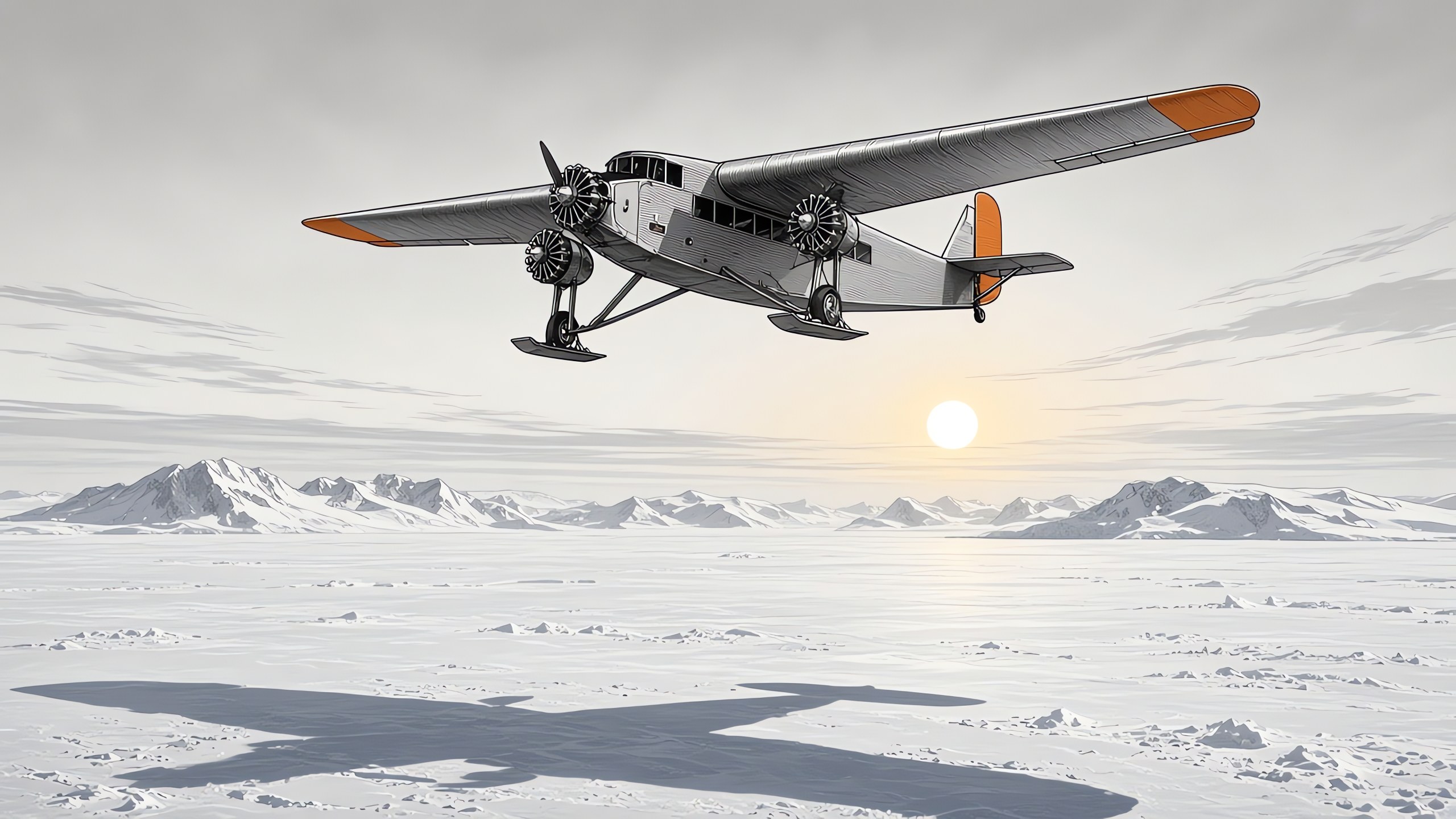
On November 29, 1929, Commander Richard E. Byrd radioed his base in Antarctica that his aircraft had reached the vicinity of the South Pole. With pilot Bernt Balchen at the controls, Harold June as copilot and radio operator, and Ashley McKinley operating the aerial camera, Byrd had completed the first flight over the bottom of the world, less than two decades after Roald Amundsen first reached the pole on foot.
Byrd was already famous. In 1926 he had claimed the first flight over the North Pole, a claim that has since been widely doubted, and in 1927 he had flown across the Atlantic. His first Antarctic expedition, which set out in 1928, built a base called Little America on the Ross Ice Shelf and brought along aircraft, radios and cameras, making it one of the best equipped polar expeditions of its time.
The plane chosen for the polar attempt was a Ford Trimotor named the Floyd Bennett, after Byrd’s late pilot and friend. Before the flight, a geological party led by Laurence Gould had gone south by dog sled to survey the mountains and report on the weather. When Gould radioed that conditions were good, the crew took off from Little America on the afternoon of November 28.
The most dangerous moment came at the Queen Maud Mountains. The heavily loaded Trimotor struggled to climb high enough to cross onto the polar plateau through a glacier pass. To save the plane, Byrd ordered sacks of emergency food thrown out through the trapdoor. Lightened, the aircraft cleared the pass and reached the high, flat ice beyond.
Navigating by sun compass and sextant, since magnetic compasses were of little use so close to the magnetic pole, Byrd calculated their position as they flew south. Shortly after 1 a.m. Greenwich time on November 29, he handed June a message to send to Little America saying they had reached the vicinity of the pole. The plane circled to allow for any error, and Byrd dropped a small American flag weighted with a stone from Floyd Bennett’s grave at Arlington National Cemetery.
The return trip was quieter. The crew landed to refuel at a supply cache near the foot of the mountains and touched down at Little America that morning, nearly 19 hours after departure. A committee of the National Geographic Society later reviewed Byrd’s navigation records and concluded that the flight had passed within a few miles of the pole and probably beyond it.
The news was greeted with celebrations in the United States. Congress promoted Byrd to rear admiral in December 1929, making him at 41 the youngest admiral in the history of the U.S. Navy. The expedition returned home in June 1930, and a documentary film of the trip won an Academy Award.
Byrd went on to lead four more Antarctic expeditions, and his work helped move polar exploration from the age of sledges to the age of aircraft and radio. The flight of the Floyd Bennett showed that the interior of Antarctica could be reached and mapped from the air, opening the way for the scientific bases that operate there today.
We strive for accuracy. If you see something that doesn't look right, click here to contact us!
 Contact Us
Sponsored Content
Enos the chimpanzee orbits…
On November 29, 1961,…
Richard E. Byrd and…
On November 29, 1929,…
Cayuse men kill missionaries…
On November 29, 1847,…

Six Kansas City firefighters…
On November 29, 1988,…

US President Lyndon Johnson…
On November 29, 1963,…
Fire destroys most of…
The historical Santa Catalina…
