
Flashback to November 23
Entertainment History
1936
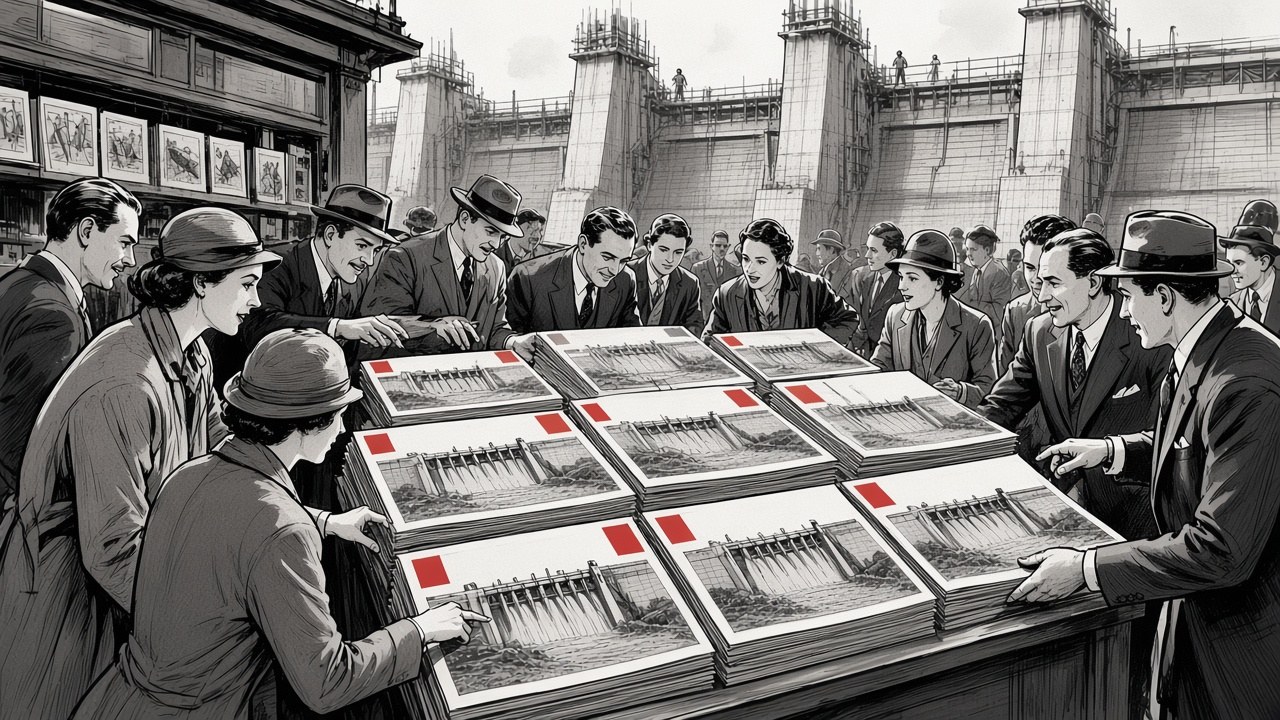
Henry Luce’s Life magazine debuts with its first issue, featuring Margaret Bourke-White’s Fort Peck Dam cover
Read moreOn November 23, 1936, a new kind of magazine arrived in American homes. That was the cover date of the first issue of Life, the weekly picture magazine launched by publisher Henry R. Luce. Built around photographs rather than text, Life changed how Americans saw the news and helped create the golden age of photojournalism.
Luce was already one of the most powerful figures in American publishing. He had co-founded Time in 1923 and launched the business magazine Fortune in 1930. In 1936, he set out to create a magazine that would show readers the world instead of simply describing it. Luce bought the name Life from a fading humor magazine of the same title and put his staff to work on the inaugural issue.
The first issue, dated Monday, November 23, actually reached newsstands a few days earlier, on Thursday, November 19. It sold for ten cents. Advertisers had been promised a circulation of 250,000, and the initial printing of about 466,000 copies sold out within hours.
The cover featured a dramatic photograph by Margaret Bourke-White of the Fort Peck Dam in Montana, a massive New Deal construction project. The image showed the towering concrete columns of the dam’s spillway, with two tiny workers at the bottom of the frame to show the scale. Bourke-White had been sent to photograph the dams of the Columbia River Basin and the Fort Peck project. She returned with more than construction pictures. Her lead story captured life in the rough boomtowns that had sprung up around the dam, a portrait of the American frontier that surprised even Life’s editors.
The magazine’s layout made its mission clear. Nearly every page gave more space to pictures than to words. Page 2 carried a full-page photograph of a newborn baby in a doctor’s hands under the caption “Life begins.” The issue also included work by photographer Alfred Eisenstaedt and a feature on the paintings of Kansas artist John Steuart Curry.
Readers quickly embraced the new format. Circulation grew from about 380,000 copies in the first week to more than one million just four months later. The early success came with a problem: Life’s advertising rates had been set based on a much smaller readership, and the magazine lost money for a time even as it became a sensation.
Over the following decades, Life became one of the most influential publications in the United States. Its photographers covered World War II, Hollywood, science, politics, and everyday American life, and images first published in its pages became part of the nation’s visual memory. Bourke-White herself went on to become one of the magazine’s most celebrated photographers and war correspondents.
The weekly edition of Life continued until 1972, when rising costs and competition from television brought it to an end. The name returned later in other forms, but the original weekly’s impact was already secure. The first issue dated November 23, 1936, proved that photographs could tell the news as powerfully as words, and it set the standard for picture magazines for generations.
We strive for accuracy. If you see something that doesn't look right, click here to contact us!
 Contact Us
Sponsored Content
The first episode of…
On November 23, 1963,…
Henry Luce’s Life magazine…
Henry Luce's new weekly…

Enrico Caruso US debut…
Celebrating the historic American…
