
Flashback to January 7
American History
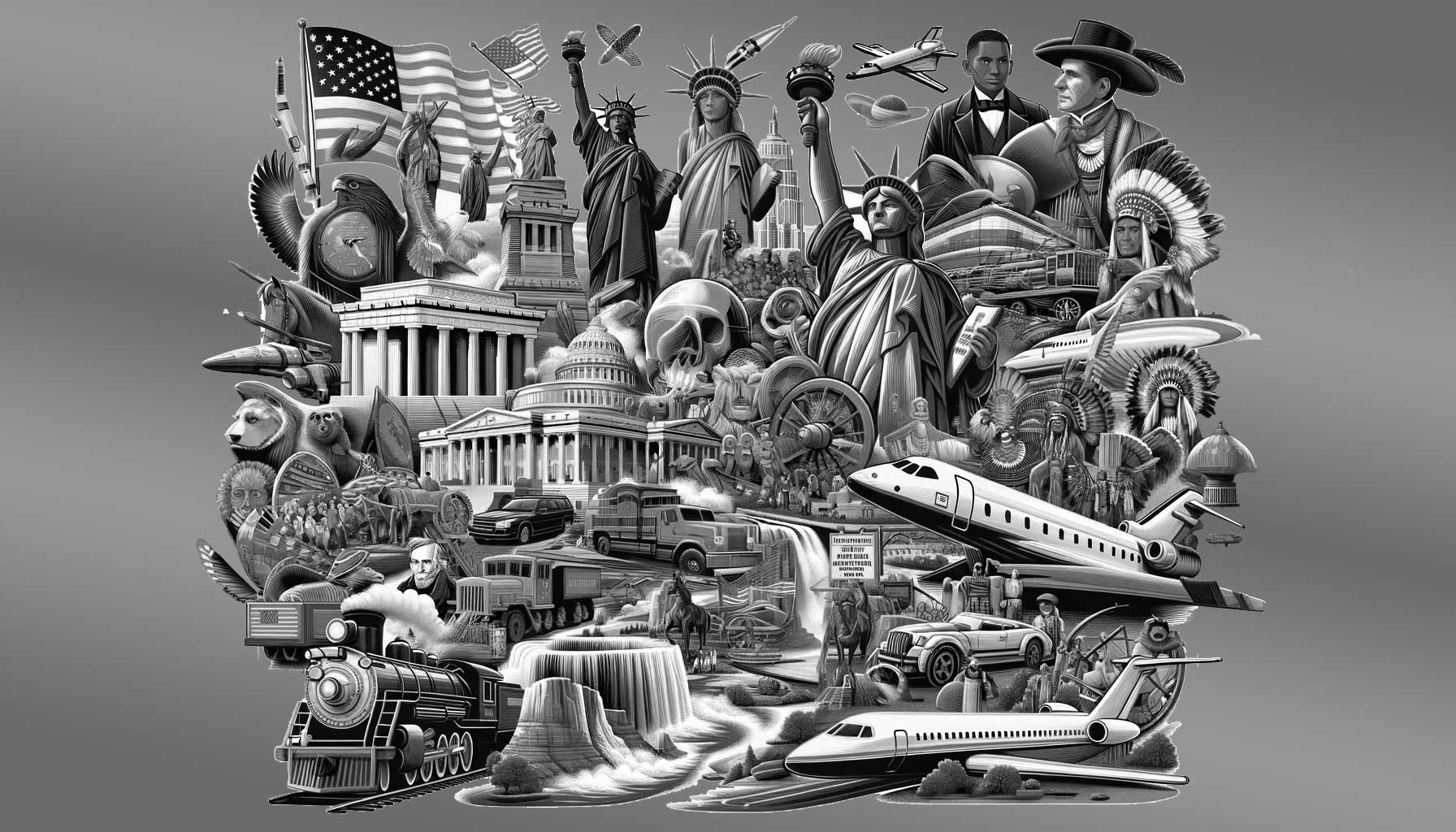
On 2nd September 1901, a cornerstone was set in American history as Vice President Theodore Roosevelt uttered his remarkable adage: “Speak softly and carry a big stick.” The speech was delivered in the context of America’s imminent rise to global prominence and continues to echoe in the discussions on US foreign policy, even today, shaped by Roosevelt’s Big Stick diplomacy.
The phrase “Speak softly and carry a big stick” is a proverb that Roosevelt coined, signifying the tactical idea of negotiation with kindness, backed by the power of strength. This, defined as the Big Stick ideology or Big Stick Policy, played a fundamental role in driving America’s approach to international relations during Roosevelt’s tenure and beyond.
Roosevelt originally made his famous “big stick” assertion in a speech at the Minnesota State Fair, just days before becoming President after the assassination of William McKinley. The metaphorical “big stick” Roosevelt referred to is American military strength, underlining his belief in maintaining and displaying strength while avoiding unnecessary conflict. The approach stood in significant contrast to the prevalent isolationist stance, marking the dawn of a new diplomatic era.
The Big Stick ideology was more than just a statement. It formed the underpinning of American foreign policy, particularly toward Latin America. Central to his outlook was the Roosevelt Corollary to the Monroe Doctrine, an extension that enabled the US to intervene in any Latin American nation that exhibited ‘wrongdoing or impotence.’ This essentially paved the way for America’s role as an international police force.
Roosevelt’s assertive approach to foreign policy marked a departure from earlier doctrines and continues to have lasting impacts today. The strength displayed during his administration in the form of the Great White Fleet, and decisive actions such as the instigation of the Panama Canal, solidify the practical applications of his ideology. A century later, his phrase is still cited as an example of persuasive diplomacy and military strength.
The assertiveness epitomized by Roosevelt’s “Speak softly and carry a big stick,” policy reveal much about the evolution of America’s international position and influence. Modern historians, political scientists, and even policymakers continue to refer to this ideology, reflecting upon its influence on shaping the United States’ unique role in global affairs.
Roosevelt’s statement underlines a multidimensional understanding of power – it is not just wielding it, but also hinting at its potential effectiveness. It is about discretion, determination, and visible strength. Today, millions of people are interested in understanding the foreign policy strategies of nations, especially the US.
As an ending note, the timeless statement, “Speak softly and carry a big stick,” by Theodore Roosevelt remains an infallible guide for policy-making even today. His advocacy for a strong military presence and a soft spoken but firm negotiation approach served as a cornerstone for American diplomacy, earning its reputation on the global stage.
We strive for accuracy. If you see something that doesn't look right, click here to contact us!
 Contact Us
Sponsored Content

One of the worst…
On January 7, 1996,…
US President Harry Truman…
On January 7, 1953,…
Lewis F Powell Jr…
On January 7, 1972,…
United Express commuter plane…
On January 7, 1994,…
The first American commercial…
On January 7, 1782,…
US Congress doubles Presidential…
On January 7, 1969,…
