
Flashback to January 8
American History
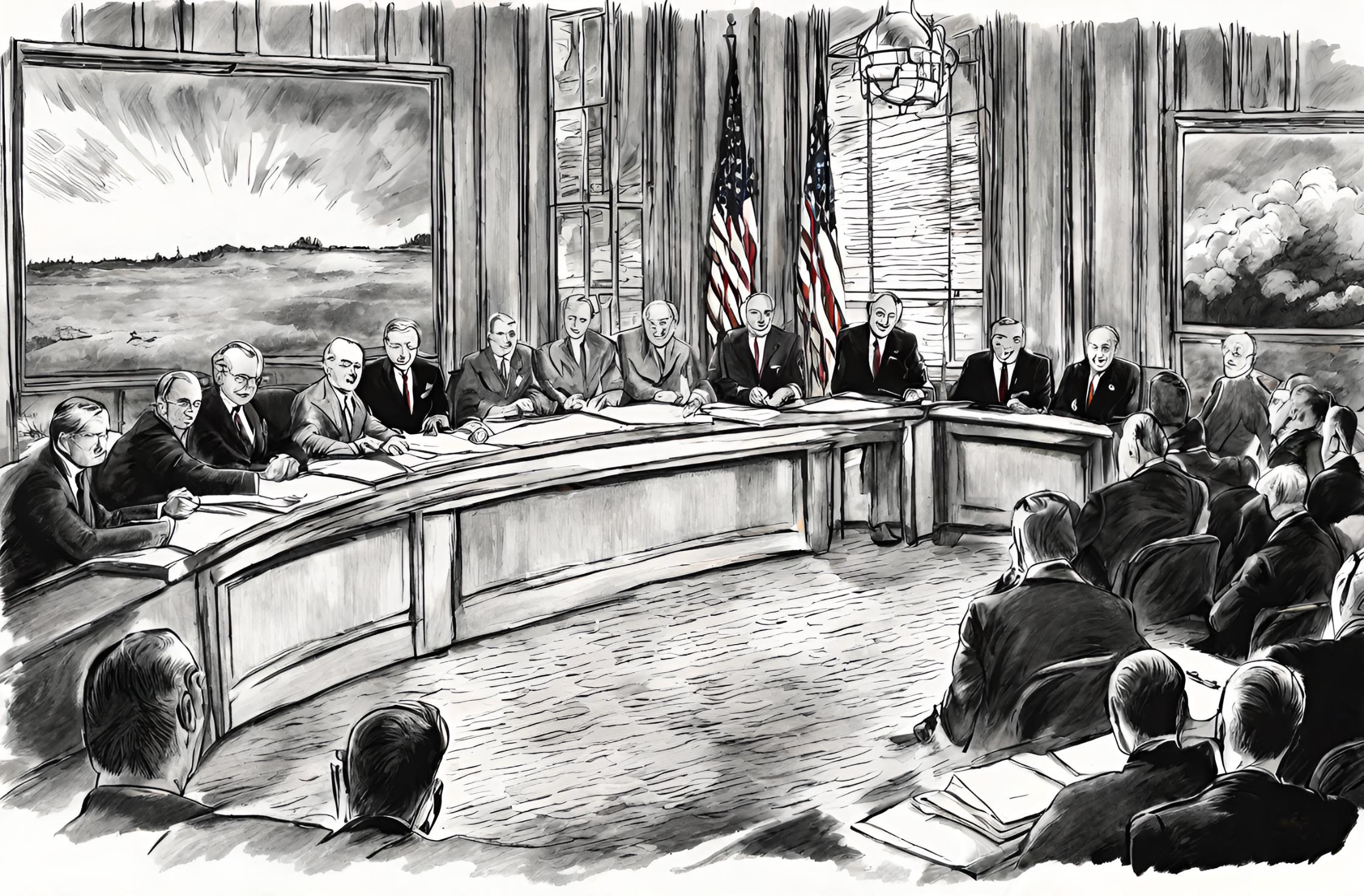
On January 7, 1953, the world received shocking news as the 33rd President of the United States, Harry S. Truman, announced the development of the hydrogen bomb. This historic event stirred mixed emotions and triggered debates about the future of warfare and nuclear proliferation. In this article, we will delve into the details of this announcement and its significance in shaping global politics and security.
The hydrogen bomb, also known as the H-bomb or thermonuclear bomb, is a devastating weapon that operates on the principle of nuclear fusion. Unlike the atomic bomb, which uses nuclear fission to release a massive amount of energy, the hydrogen bomb harnesses the power of nuclear fusion, the process that powers the sun. This results in an exponentially greater explosion, capable of inflicting unparalleled destruction.
President Truman’s announcement marked a significant milestone in the arms race between the United States and the Soviet Union during the Cold War. The Soviet Union had already successfully tested its own atomic bomb in 1949, and the development of the hydrogen bomb by the United States elevated tensions to new heights. The destructive power of this new weapon showcased the immense capabilities of these two superpowers and demonstrated the potential for global devastation.
Acknowledging the consequences of the hydrogen bomb, President Truman stated that its development was a response to the Soviet Union’s nuclear advances. He argued that the United States needed to maintain a strong deterrent against any potential aggression. However, this announcement was met with widespread concern and fear of an escalated arms race and a potential doomsday scenario.
The hydrogen bomb announcement led to intense debate both domestically and internationally. Critics argued that the development of such a destructive weapon would not only escalate the arms race but also increase the likelihood of a devastating global conflict. The announcement fueled anti-nuclear movements and calls for disarmament across the globe. Many believed that investing in peaceful coexistence and cooperation rather than military might was the path to a safer world.
Despite the concerns and push for disarmament, the United States continued to develop and test nuclear weapons. This led to the Soviet Union following suit, intensifying the arms race and further heightening global tensions. The hydrogen bomb announcement had long-lasting consequences on the world stage, as it set the stage for the United States and the Soviet Union to compete and engage in a decades-long standoff.
Throughout the Cold War, the hydrogen bomb threat loomed large, serving as a constant reminder of the devastating power that these two superpowers possessed. It also prompted other countries to embark on their own nuclear programs, further increasing the risk of nuclear warfare.
Over time, efforts were made to limit the proliferation of nuclear weapons. The Treaty on the Non-Proliferation of Nuclear Weapons (NPT), which came into effect in 1970, aimed to prevent the spread of nuclear weapons and promote disarmament. However, the threat of nuclear weapons has not entirely dissipated, with several countries now possessing these devastating weapons.
President Harry Truman’s announcement of the development of the hydrogen bomb on January 7, 1953, marked a turning point in global security and politics. This technological advancement intensified the arms race between the United States and the Soviet Union, sparking fear and concern among the international community. The hydrogen bomb announcement triggered debates about the future of warfare and nuclear proliferation and ultimately shaped the course of the Cold War. While efforts have been made to limit the spread of nuclear weapons, the threat remains, underscoring the importance of continued diplomatic efforts towards disarmament and global peace.
We strive for accuracy. If you see something that doesn't look right, click here to contact us!
 Contact Us
Sponsored Content
President George Washington delivers…
On January 8, 1790,…

Watergate scandal: The trial…
The trial of seven…
Herman Hollerith receives a…
On January 8, 1889,…
In New Hampshire, USA,…
During the Democratic caucuses…
US Airways Express Flight…
On 1/8/2003, tragedy struck…
Unsuccessful slave revolt led…
The unsuccessful slave revolt,…
