
Flashback to March 27
American History
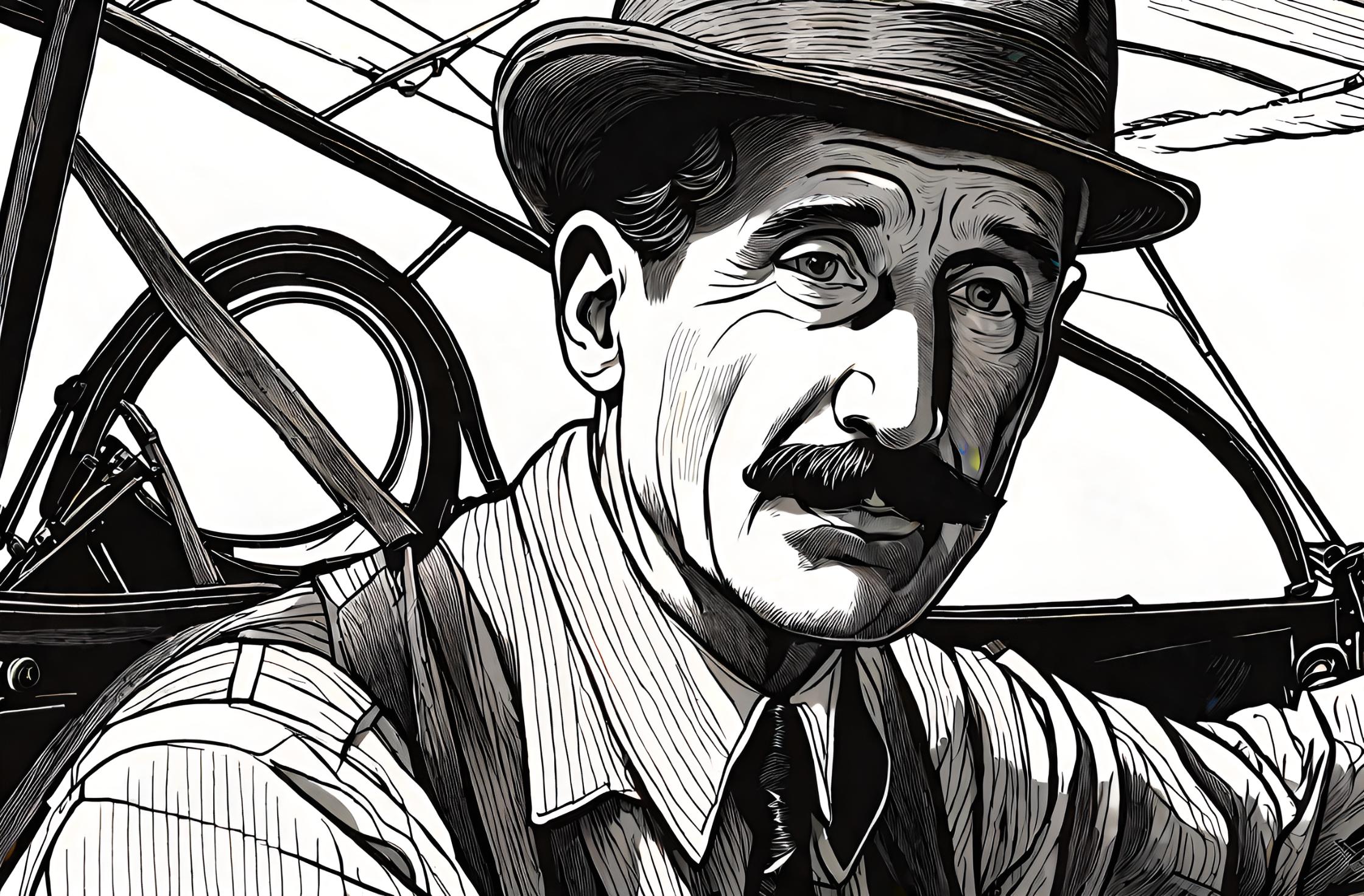
1903
Orville Wright in The Wright Flyer made the first sustained flight by a manned aircraft
Read moreOn December 17, 1903, aviation history was forever marked by a significant event at Kittyhawk, North Carolina. At precisely 10:35 AM, Orville Wright, one of the renowned Wright brothers, embarked on the first sustained, controlled, and powered aircraft flight. Fueled by their persistent spirit and innovative minds, Orville and his brother Wilbur had spent years developing their pioneering aircraft, the 12hp Flyer I.
Orville Wright’s flight at Kill Devil Hills, an iconic location within Kittyhawk, was an event of considerable magnitude, forever imprinting the Wright Brothers’ legacy in aviation history. Their innovative 12hp Flyer I soared through the sky for a fleeting, yet impactful 12 seconds. Although brief, the flight was momentous, effectively opening the doors to the evolution and expansion of modern aviation and travel.
The journey to the groundbreaking flight was not a spur of the moment. Orville and his older brother Wilbur had meticulously toiled over their passion project, enduring setbacks and skepticism with unwavering dedication. Drive and innovation were ingrained in the Wright brothers, tracing back to their early years. The creation of the 12hp Flyer I was a testament to their indomitable spirit, innovative prowess, and boundlessly pioneering imaginations.
What differentiates the 12hp Flyer I was its unique blend of design and technology. Equipped with a 12 horse-power engine, the aircraft was a groundbreaking feat of ingenuity. The Wright Brothers’ meticulous design was tailored towards stability, control, and power, aspects that played a pivotal role in securing a successful flight. At the core of their creation was a detailed understanding of aerodynamics, a field they investigated with microscopic precision.
The setting of this incredible event, Kittyhawk, is a small coastal town in North Carolina. However, the world recognizes it for a notable reason, The Wright Brothers National Memorial in Kill Devil Hills, which commemorates the significant event of the first powered flight. A massive granite monument stands atop the hill, marking the precise location of the iconic liftoff and the enduring legacy the Wright Brothers left behind.
Orville Wright’s flight in Kittyhawk, however short-lived, revolutionized aviation. It was the impetus for a continued quest for development and growth in the industry, inspiring numerous other inventors and aviation enthusiasts. The Wright Brothers’ persistence, dedication, and unwavering belief in their dreams had far-reaching impacts beyond their lifetimes, fundamentally altering the conception of human mobilization and the transport industry.
Reflecting on the importance of this event illuminates the incredible potential human innovation holds. In the span of a mere 12 seconds, the Wright brothers laid down the groundwork for a century of aviation advancements. In the heart of North Carolina, against the backdrop of the Kill Devil Hills, Orville Wright piloted the maiden flight, marking a significant leap for mankind towards conquering the skies.
Moreover, this event’s significance extends beyond the realm of aviation. It narrates a compelling story of human ambition, perseverance, and innovation. The first sustained, controlled, powered aircraft flight conducted by the Wright Brothers was more than an engineering milestone; it was an instigator to a new era of creative thinking and the limitless possibilities that accompany it.
To conclude, the dawn of December 17, 1903, in Kittyhawk, North Carolina ushered in a new era of aviation. Orville Wright, aboard his innovative 12hp Flyer I, embarked on the first ever sustained, controlled, powered flight, forever etching the Wright Brothers’ names into the annals of history. Despite its short duration, those remarkable 12 seconds altered the future course of human civilization, forever pushing the boundaries of what seemed achievable. Today, we marvel at the giant strides we have since made in aviation, the seeds of which were planted in these early triumphs over the skies.
We strive for accuracy. If you see something that doesn't look right, click here to contact us!
 Contact Us
Sponsored Content
Construction of the Trans-Alaska…
The construction of the…

President Johnson vetoes civil…
On 3/27/1866, President Johnson…
Siege of Spanish Fort,…
The Siege of Spanish…
First Mormon temple dedicated…
The First Mormon temple,…
Farm Credit Administration (US)…
On March 27, 1933,…
