
Flashback to November 24
American History
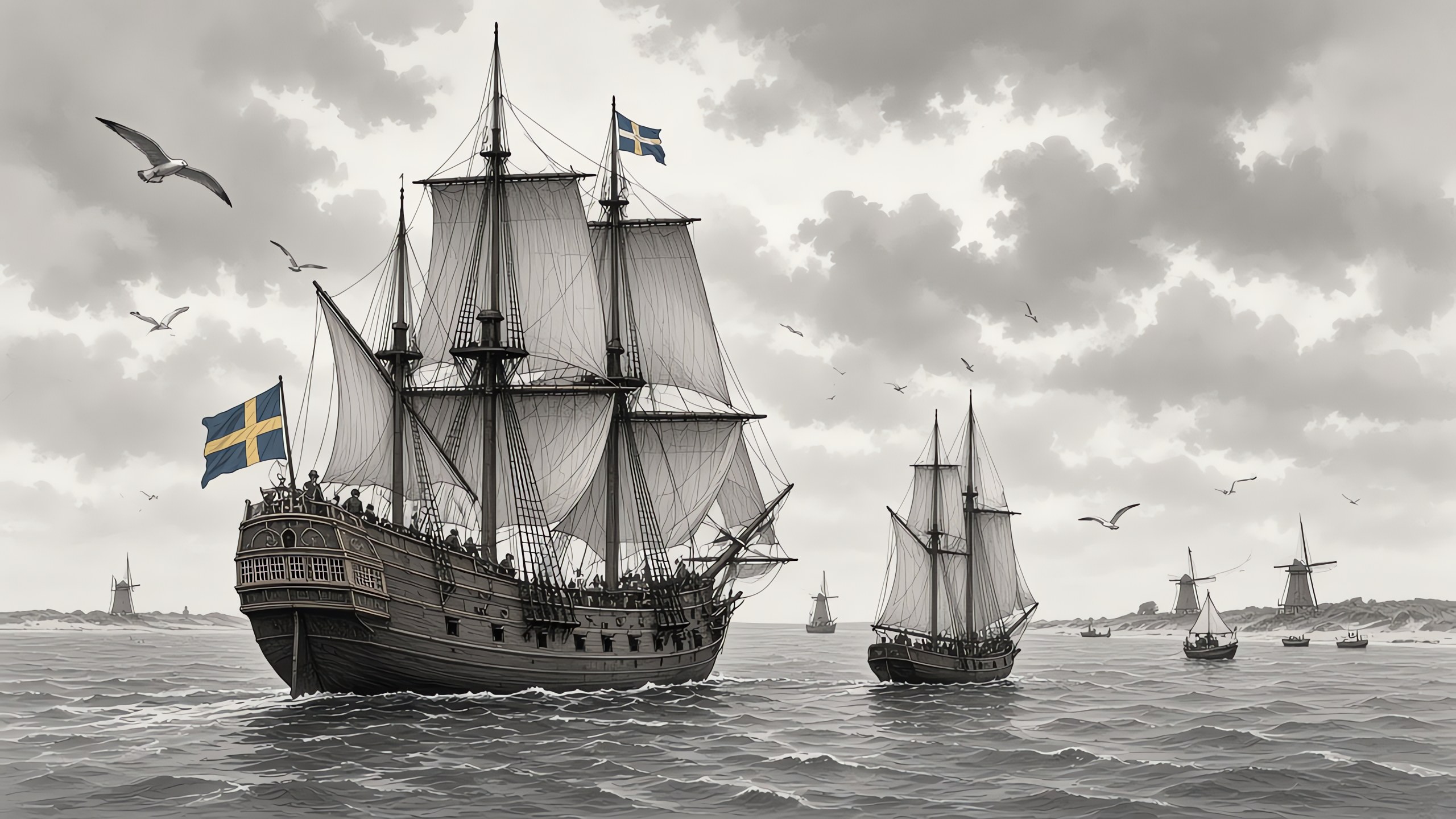
On December 31, 1637, two small ships slipped out of Texel, the island anchorage at the mouth of the Zuiderzee in the Dutch Republic, and turned west into the Atlantic. The Kalmar Nyckel and the Fogel Grip carried the first expedition of the New Sweden Company, and their commander was Peter Minuit, the man who had once bought Manhattan for the Dutch. Their destination, kept secret even from friends in Holland, was the Delaware River.
Minuit was born in Wesel, in the Rhineland, and had served as director of New Netherland from 1626 until he was recalled in 1631. Out of work and at odds with the Dutch West India Company, he found a new patron through Samuel Blommaert, an Amsterdam merchant who was advising the Swedish crown. Blommaert introduced him to Chancellor Axel Oxenstierna, and together they planned a Swedish trading colony on the Delaware, a region the Dutch claimed but had barely settled.
The New Sweden Company was formed with both Swedish and Dutch investors. Two ships were fitted out at Gothenburg: the Kalmar Nyckel, an armed ship skippered by Jan Hindricksen van der Water, and the smaller Fogel Grip under Andrian Jöransen. Their crews were roughly half Dutch and half Swedish, and a small party of soldiers sailed under Måns Nilsson Kling. The holds were packed with cloth, axes, kettles and other goods to trade with the Native peoples for beaver pelts.
The ships left Gothenburg in November 1637, though the exact day has been lost. The North Sea soon tested them. Heavy storms separated the two vessels, and the leaking Kalmar Nyckel limped into Texel, where she needed a new mast and repairs to her bow. The battered Fogel Grip reached Holland about a week later.
The weeks of repairs drew attention. Kiliaen van Rensselaer, the patroon of a large estate in New Netherland, asked Minuit to carry goods and passengers to his colony. Minuit agreed to help but told him only that he was bound for Virginia, guarding the true purpose of the voyage from the Dutch.
With the ships repaired and restocked, the expedition put to sea on the last day of 1637. Minuit’s journal of the crossing, along with his map and sketches of the settlement, was later lost, so almost nothing is known of the voyage itself.
The ships reached Delaware Bay in March 1638. Minuit sailed up the Minquas Kill, which he renamed the Christina, bought land from local Native leaders and built Fort Christina, named for Sweden’s young queen, on the site of present-day Wilmington. He did not live to see the colony grow. On the homeward voyage he stopped at the Caribbean island of St. Christopher to trade, and in the summer of 1638 he was lost when a hurricane swept the ship he was visiting out to sea.
New Sweden survived until 1655, when Peter Stuyvesant took it for the Dutch, but its Swedish and Finnish settlers stayed on and left a lasting mark on the Delaware Valley. They are often credited with bringing the log cabin to America. A full-size replica of the Kalmar Nyckel, launched in Wilmington in 1997, now sails as Delaware’s official tall ship.
We strive for accuracy. If you see something that doesn't look right, click here to contact us!
 Contact Us
Sponsored Content

James J Kilroy, tank…
"James J Kilroy, originator…

Un-American Activities Committee finds…
On November 24, 1947,…
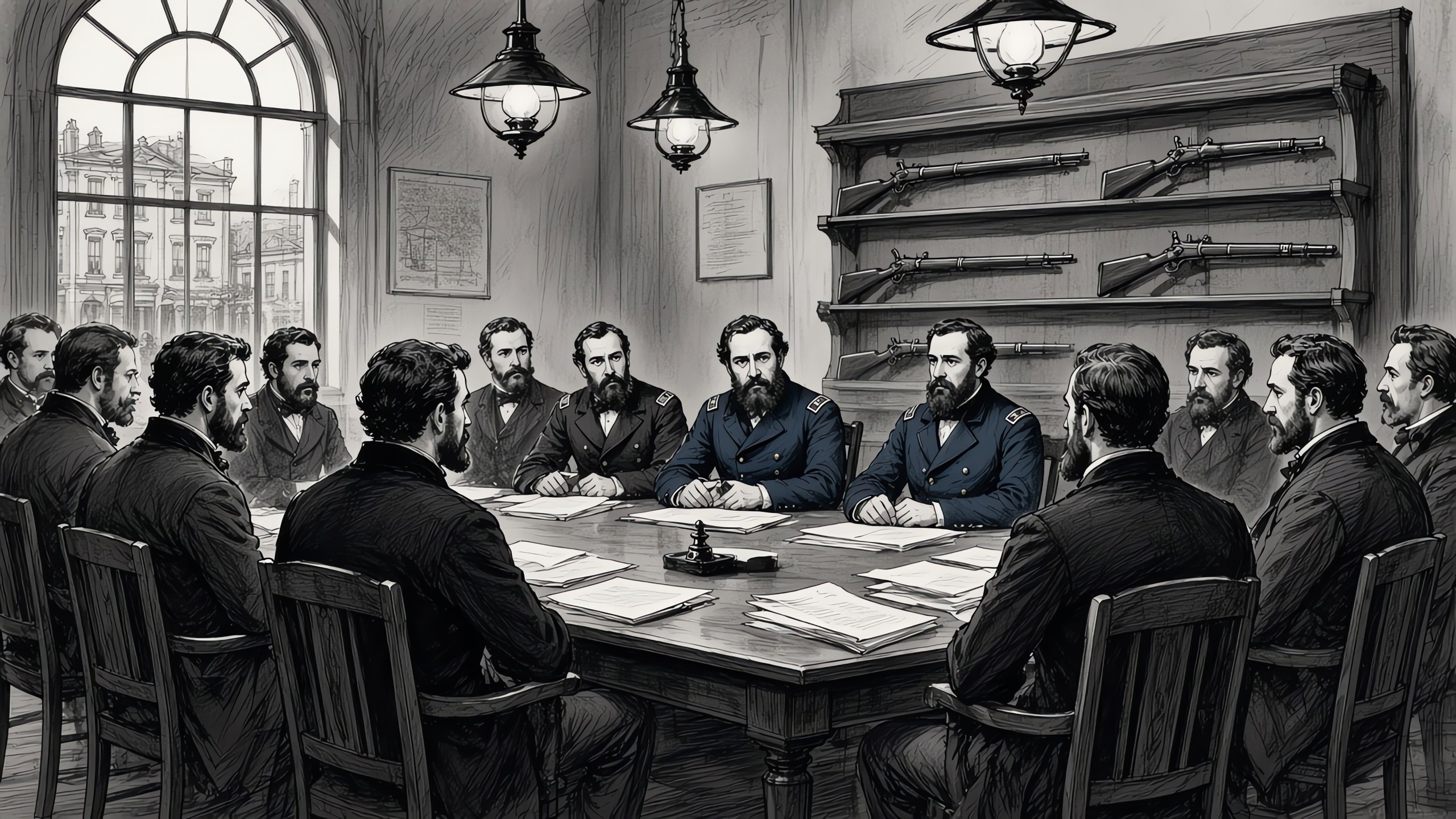
National Rifle Association organized…
"The National Rifle Association…

Jack Ruby shoots Lee…
On November 24, 1963,…

Hijacker Dan Cooper (AKA…
On November 24, 1971,…
