
Flashback to May 25
World History

On September 14, 1944, a significant historical event carved its mark in the annals of military canon when the United States Marines made their strategic entry onto the island of Peleliu. This pivotal occurrence is not only important from a military perspective but also holds a rich historical narrative that reverberates through time, reminding us of the sheer human resilience in times of war.
Situated in the Pacific Ocean, Peleliu is a small island in the Palau archipelago known for its diverse marine life and beautiful corals. Yet, it was the strategic location of this island that caught the attention of the U.S. military command during World War II. However, hidden behind the tropical beauty lay an arduous battlefield that would prove to be one of the bloodiest encounters in the Pacific War.
In the predawn hours of that fateful day in 1944, as part of Operation Stalemate II, around 28,000 United States Marines and soldiers landed on the white sandy beaches of Peleliu. The landing was conducted to secure the island and neutralize the Japanese forces stationed there. The operation was based on the belief that seizing Peleliu would protect the U.S. forces’ flank in their eventual attack on the Philippines.
Yet, what the U.S. Marines faced on the island was far beyond their initial estimations. The Japanese Imperial Army, deeply entrenched in well-fortified positions, put up a ferocious resistance. Unlike previous Pacific campaigns where the Japanese soldiers predominantly fought on the beach, in Peleliu, they dug an extensive network of caves and bunkers into the island’s rugged terrain, launching surprise attacks and making them hard to dislodge.
However, the resolve and courage of the United States Marines were not to be undermined. Their arduous struggle culminated in overcoming the fortified defences and forced the number of Japanese units into isolated pockets. Despite the enormous cost of human lives and resources, it demonstrated the valorous spirit that defines the United States Marines. This event marked a turning point in the Pacific theater, highlighting the zeal and effectiveness of the United States Marines to engage in challenging land battles.
Illustrating the historical significance of the landing on Peleliu involves bringing alive an era defined by strategic alliances, courageous maneuvers, and ideological battles. The United States’ involvement and the role played by the U.S. Marines provide a lens to understand the broader dynamics of World War II.
As emphasized, the battle of Peleliu is not only a demonstration of military strategy and grounded warfare. It epitomizes the spirit of resistance, underlining the importance of unity, strategic foresight, and relentless courage. Undoubtedly, the landing of Marines on the island is an enduring testament to the tenacity of the military forces and the continuing evolution of war strategies.
Looking back, the landing of the United States Marines on Peleliu, is an event that has informed military tactics while shedding light on the immense sacrifices made during these challenging confrontations. It’s a significant chapter of a wider narrative that commemorates the determination of the human spirit in the face of severe adversity.
the United States Marines’ landing on the island of Peleliu may have happened more than seven decades ago, but its impact resonates till today. It remains one of the most significant chapters in U.S. military history, serving as a powerful reminder of the cost, ramifications, and resounding triumphs of war. As we delve deeper into this specific event, we begin to view it not just as a battle in the Pacific war but also as a crucial moment that defined the course of history and continues to influence military strategies worldwide.
We strive for accuracy. If you see something that doesn't look right, click here to contact us!
 Contact Us
Sponsored Content
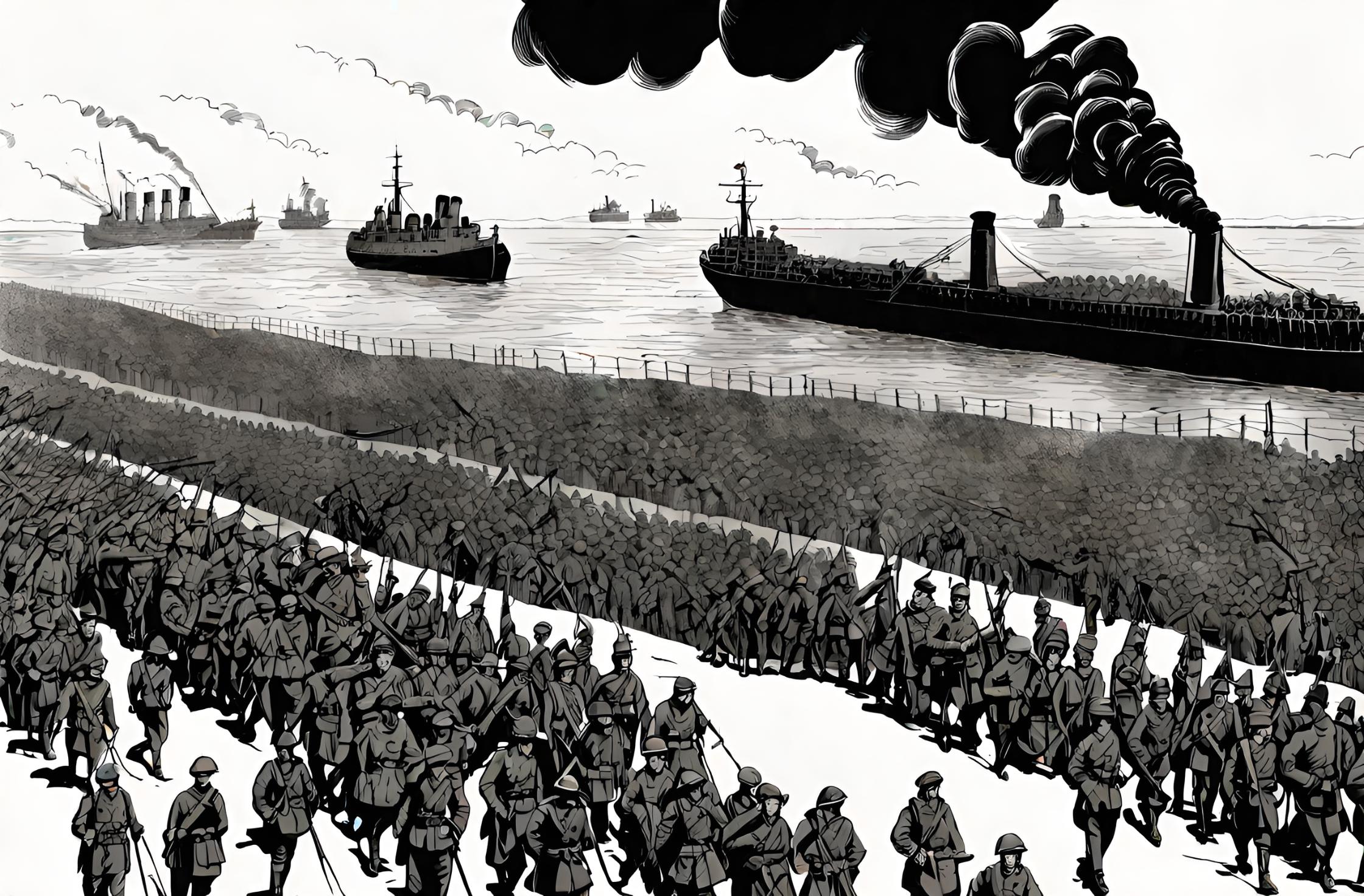
The Dunkirk Evacuation starts
Experience the pivotal 1940…
English Parliament prohibits circulation…
On 5/25/1813, the English…
NTstor Kirchner becomes President…
On May 25, 2003,…
Saint Boniface IV dies,…
On May 25, 615,…
Aldhelmus of Ealdhelm, England,…
On May 25, 709,…
Gas lamp at Paris…
On 5/25/1887, a tragic…
