
Flashback to January 7
American History

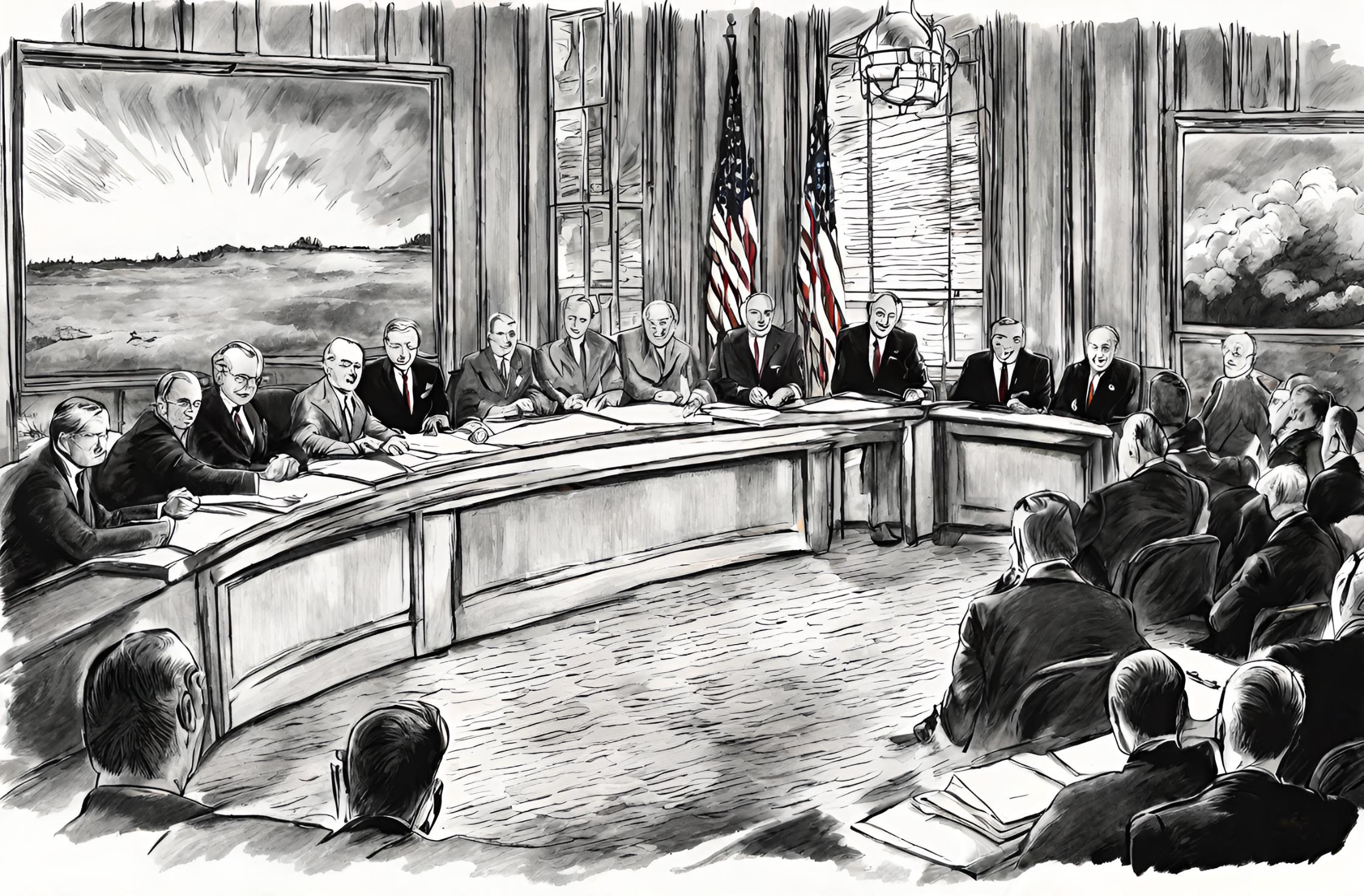
On January 5, 1957, a significant event took place in the history of the United States. US President Dwight Eisenhower addressed the nation and asked Congress to send troops to the Middle East. This move had far-reaching consequences and shaped the future relations between the US and the Middle East. In this article, we will delve into the details of this event and its impact on the geopolitical landscape.
During the mid-1950s, the Middle East was embroiled in a socio-political turmoil. The Cold War between the United States and the Soviet Union added fuel to the fire, as nations in the region found themselves at the center of this global power struggle. Eisenhower believed that the stability of the Middle East was crucial for the security and interests of the United States.
The occasion for President Eisenhower’s request to Congress was the escalating tensions between Egypt and Israel. In 1956, Egypt’s President Gamal Abdel Nasser nationalized the Suez Canal, a vital waterway connecting the Mediterranean Sea and the Red Sea. This move was met with strong opposition from Western powers, particularly Britain and France, who relied heavily on the canal for their maritime trade.
Fearing the spread of communism and concerned about the Soviet Union gaining influence in the region, President Eisenhower took a decisive step by asking Congress to authorize the use of military force to maintain peace in the Middle East. This request marked the first time the United States directly intervened militarily in the region.
Eisenhower’s plea to Congress was met with a mixed response. Some lawmakers supported the idea, recognizing the need to protect US interests and preserve stability in the Middle East. Others, however, expressed concerns about the potential consequences and the long-term implications of American involvement in the region.
Ultimately, Congress authorized Eisenhower’s request, and in response, the US sent troops to the Middle East to act as a deterrent against further aggression and to restore stability. The American forces were stationed in Lebanon, which was experiencing its own political crisis at the time. The deployment of troops was viewed as a show of strength and a signal to other countries in the region that the United States was committed to maintaining peace and protecting its interests.
The repercussions of this decision were significant. On the one hand, the presence of American troops helped deter further conflict and stabilized the region to some extent. On the other hand, it also fueled anti-American sentiments among various factions in the Middle East and contributed to the perception of the United States as an imperialistic power meddling in the affairs of other nations.
Furthermore, the events of 1957 set a precedent for future US involvement in the Middle East. Over the years, the United States has been embroiled in numerous conflicts and military operations in the region, often under the guise of protecting its interests or spreading democratic values. This ongoing involvement has had a profound impact on the geopolitical landscape of the Middle East and continues to shape international relations to this day.
President Dwight Eisenhower’s request to Congress to send troops to the Middle East on January 5, 1957, was a pivotal moment in US history. It demonstrated the United States’ commitment to preserving stability in the region and protecting its interests. However, it also set in motion a series of events that would have long-lasting consequences, shaping American foreign policy in the Middle East for decades to come.
We strive for accuracy. If you see something that doesn't look right, click here to contact us!
 Contact Us
Sponsored Content

One of the worst…
On January 7, 1996,…
US President Harry Truman…
On January 7, 1953,…
Lewis F Powell Jr…
On January 7, 1972,…
United Express commuter plane…
On January 7, 1994,…
The first American commercial…
On January 7, 1782,…
US Congress doubles Presidential…
On January 7, 1969,…
