
Flashback to May 25
World History

On January 5, 1919, the insurrection of the communist Spartakus group took place in Berlin, Germany. This event would ultimately spark a political clash that lasted for seven days, before being violently suppressed. Tragically, a few days later, the leaders of the group, Karl Liebknecht and Rosa Luxemburg, were assassinated. This event remains a significant moment in German history, highlighting the divisions and conflicts that emerged during the aftermath of World War I.
The Spartakus group, named after the Roman gladiator Spartacus, emerged in 1916 from a split within the Social Democratic Party of Germany (SPD). Led by Karl Liebknecht and Rosa Luxemburg, this radical faction sought to establish a communist state in Germany. Dissatisfied with the more moderate policies of the SPD and the ongoing war effort, the Spartakus group aimed to instigate a revolution and establish a socialist society.
The insurrection was originally planned for January 6, 1919, but due to a misunderstanding, it began a day earlier. The Spartakus group, comprising mainly of militant workers, students, and soldiers, took control of several key buildings in Berlin, including the newspaper offices of Vorwärts and the Imperial Telegraph Office. They also established the Revolutionary Committee of the German Workers’ and Soldiers’ Councils as a provisional government.
The uprising sparked fierce clashes between the Spartakus group and the existing government, which was predominantly composed of the centrist SPD. The political climate in Germany at the time was highly volatile, as the country was in a state of turmoil following the abdication of Kaiser Wilhelm II, the end of World War I, and the signing of the Treaty of Versailles, which imposed significant economic and territorial burdens on Germany.
The government, led by Social Democratic politicians Friedrich Ebert and Philipp Scheidemann, was determined to suppress the Spartakus uprising. They employed the Freikorps, a paramilitary organization composed of demobilized soldiers, to quell the rebellion. The Freikorps, known for their extreme right-wing nationalist beliefs, were ruthless in their efforts to crush the communist insurrection.
Over the course of seven days, Berlin became a battleground. Fierce street fights, artillery bombardments, and sniper attacks intensified as the government forces sought to regain control. Despite their initial gains, the Spartakus group was ultimately outnumbered and outgunned. On January 12, 1919, the government forces launched a final assault on the occupied buildings, effectively ending the insurrection.
The aftermath of the insurrection was marked by a brutal crackdown on left-wing groups and individuals. Liebknecht and Luxemburg, who had gone into hiding following the suppression of the uprising, were captured by the Freikorps on January 15, 1919. They were taken to the Eden Hotel and brutally executed. Their deaths sent shockwaves throughout Germany and the international socialist movement, turning Liebknecht and Luxemburg into martyrs for the communist cause.
The insurrection of the communist Spartakus group and the subsequent assassinations of Liebknecht and Luxemburg had far-reaching consequences for Germany’s political landscape. The division between the radical left and the moderate socialists deepened, leading to the founding of the Communist Party of Germany (KPD) later that year. The events also contributed to the political instability in the Weimar Republic and played a role in shaping the rise of extremist movements, such as the National Socialists (Nazis) in the 1920s and 1930s.
the insurrection of the communist Spartakus group in Berlin, Germany, on January 5, 1919, triggered a week-long clash between radical revolutionaries and the government forces. The event was a manifestation of the post-war political turmoil and societal divisions within Germany. The tragic assassinations of Karl Liebknecht and Rosa Luxemburg in the aftermath of the insurrection further intensified the political strife, leaving a lasting impact on the country’s history.
We strive for accuracy. If you see something that doesn't look right, click here to contact us!
 Contact Us
Sponsored Content
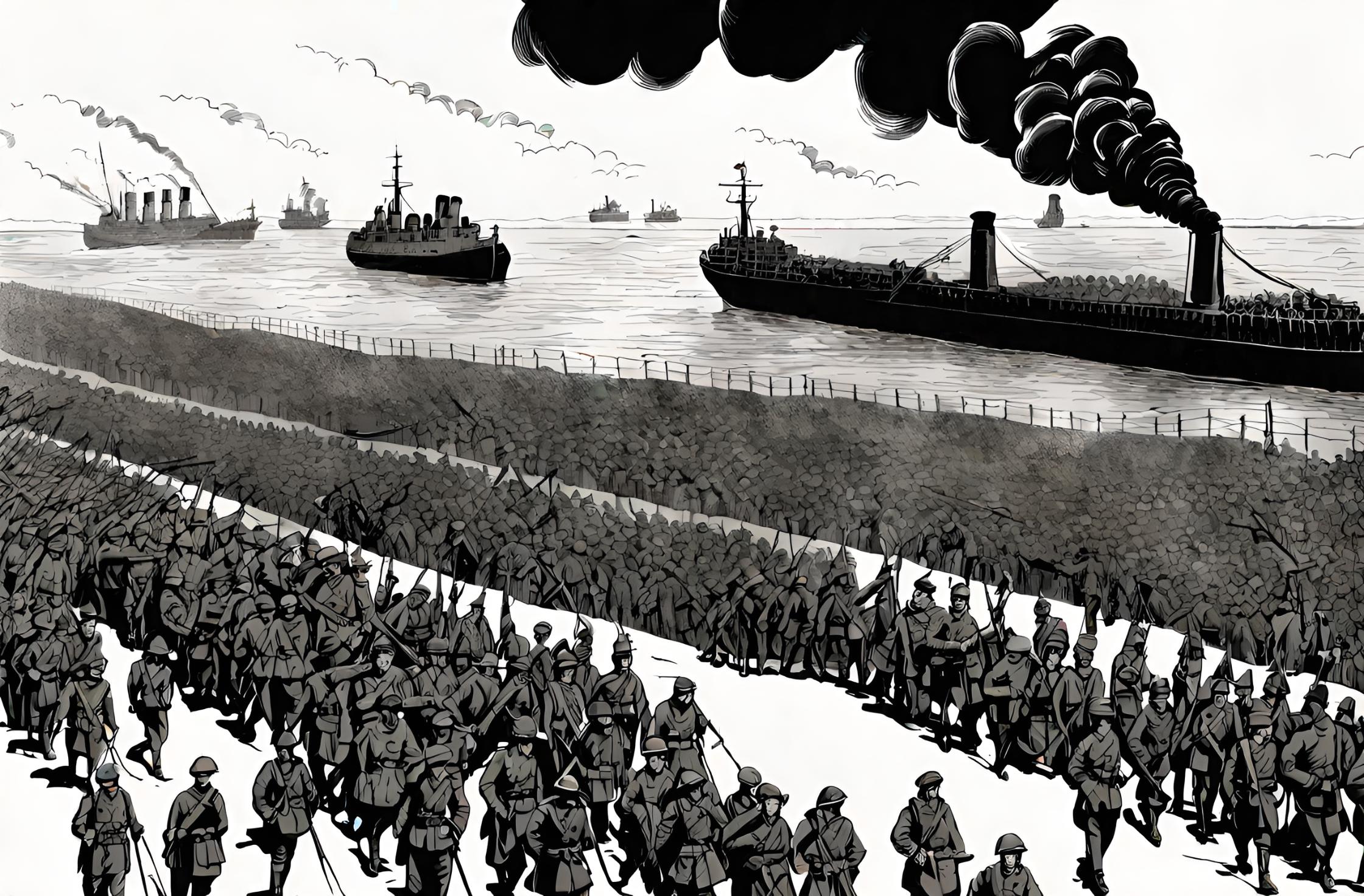
The Dunkirk Evacuation starts
Experience the pivotal 1940…
English Parliament prohibits circulation…
On 5/25/1813, the English…
NTstor Kirchner becomes President…
On May 25, 2003,…
Saint Boniface IV dies,…
On May 25, 615,…
Aldhelmus of Ealdhelm, England,…
On May 25, 709,…
Gas lamp at Paris…
On 5/25/1887, a tragic…
